PCB Assembly
Arya Li, Project Manager at NextPCB.com

 NextPCB Capabilities
Printed Circuit Boards
 Process Capabilities
 PCB Design-Aid & Layout
 Quality
 Drills & Throughplating
 Factory & Certificate
 PCB Assembly Factory Show
Certificate

Support Team
Feedback:
support@nextpcb.com


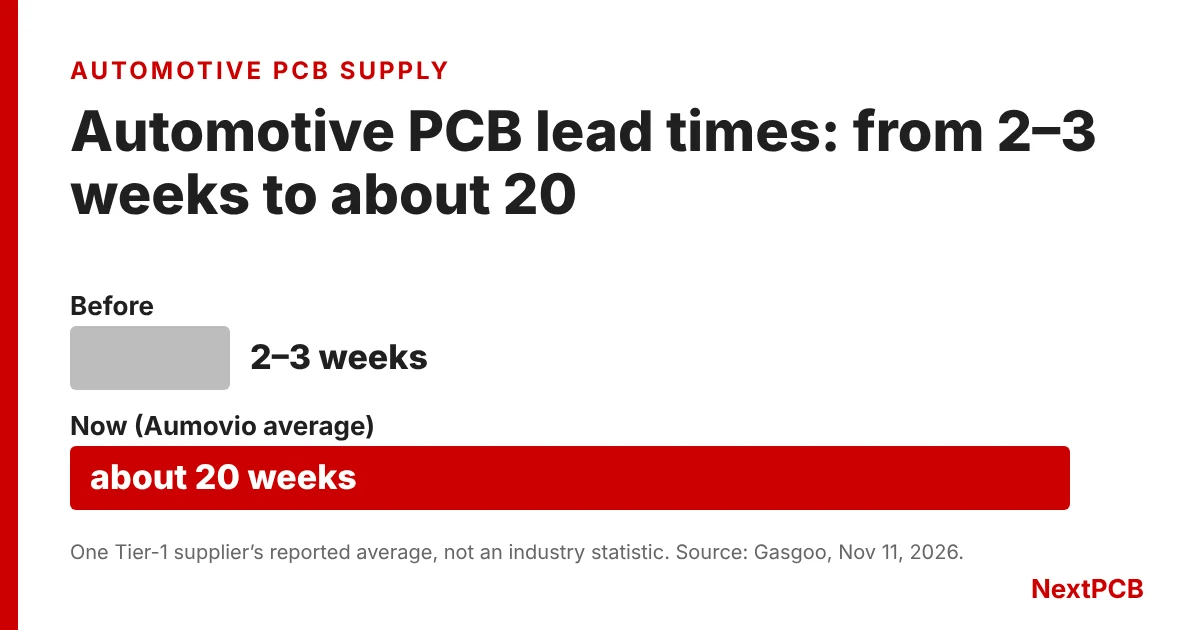
Figure 1: Automotive PCB lead times, before and now, as reported by one Tier-1 supplier. Source: Gasgoo.
If your automotive board used to ship in a couple of weeks and your fabricator is now quoting months, you are not alone. At a supplier conference this month, the China COO of the Tier-1 supplier Aumovio said automotive PCB lead times “used to run two to three weeks — now they average 20” (Gasgoo). That is roughly seven to ten times longer, by our arithmetic.
This guide collects what has actually been reported, separates measurements from opinions, and turns it into a plan: what is driving the delays, which programs are exposed, and what to do before your next release. Every figure below links to its source. Where a claim comes from one company or one unnamed insider, we say so.
The 20-week figure is one Tier-1 supplier’s account at one event, not an industry-wide statistic. We have not found a published industry average. For the general-market picture across all PCB types, see Why PCB Lead Times & Prices Are Rising in 2026. Table 1 lists each reported claim with its source so you can judge the strength of each one.
Table 1. What has been reported, and by whom
| Claim | Who said it | Where it was reported |
|---|---|---|
| Automotive PCB lead times used to run two to three weeks and now average about 20 | Aumovio’s China COO, at a supplier conference | Gasgoo; Elm Analytics |
| Upstream materials (laminate, prepreg, glass cloth), not board-making capacity, are the main constraint | Aumovio’s China COO; the digest’s own summary | Gasgoo; Elm Analytics |
| Suppliers are shifting capacity toward ultra-thin cloth and low-profile copper foil for AI servers, away from the thicker cloth car boards use | Industry reporting and conference remarks | Gasgoo; Elm Analytics |
| Toyota’s JAT910 looms make roughly 90–95% of the ultra-thin cloth niche; lead times run 18–24 months; Toyota stopped taking new high-end loom orders in May 2026 | Shanghai Securities News and Cailian Press, as cited by Gasgoo; the digest cites over 90% and a backlog to 2030 | Gasgoo; Elm Analytics |
| Global HVLP4 copper foil: about 850 tons of monthly demand in 2025 against about 700 tons of capacity | Minsheng Securities estimate | Gasgoo |
| Price rises since Q4 2025 have spread from laminate and glass cloth to drill bits and cover plates | A PCB-maker insider (not named) | Gasgoo |
| 2025 PCB output about $85.8 billion (+16.7%); server and storage PCBs +46.9%, automotive PCBs +5.7%; automotive growth about 3.3% a year through 2030 (March 2026 estimate) | Prismark data, as cited by Gasgoo | Gasgoo |
| Rivian says e-glass for printed circuit boards is “really hard to find” because of the data center boom | Rivian’s hardware chief | InsideEVs |
| 2027 will be the most difficult year for automotive supply security, with relief from bottlenecks likely only in 2028 | A supplier executive (not named); an opinion, not a measurement | Gasgoo |
Two cautions. The price-spread claim comes from an unnamed insider, and the 2027 and 2028 outlook is a supplier executive’s opinion. Treat both as signals, not data.
A circuit board starts as copper foil, glass cloth and resin, which are combined into laminate and prepreg. When AI server makers lock up the highest-grade versions, everyone else queues behind them. Gasgoo reports that AI customers often lock in orders for 2027 or even 2028 (Gasgoo). For a deeper look at how AI demand reshapes PCB prices, see Why AI Servers Are Driving Up PCB Prices.
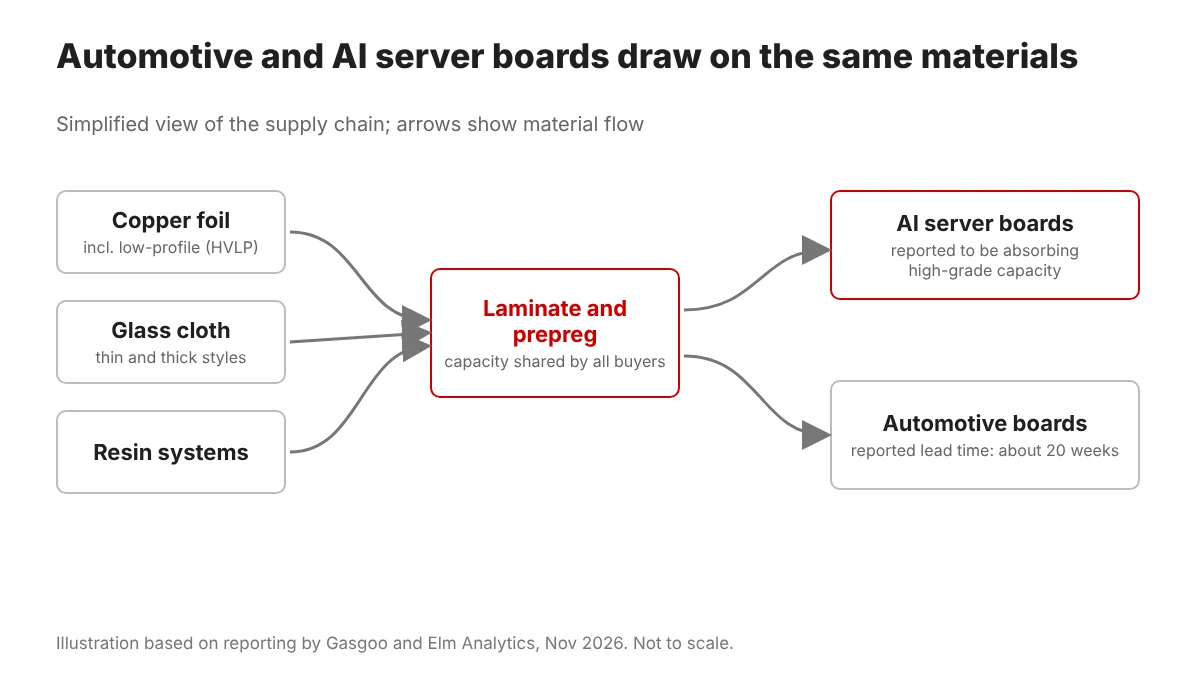
Figure 2: Automotive and AI server boards draw on the same laminate and prepreg capacity. Simplified illustration.
Glass cloth is woven on specialised looms. According to Shanghai Securities News and Cailian Press, as cited by Gasgoo, Toyota’s JAT910 looms hold nearly 95% of the ultra-thin cloth niche, lead times for a loom run 18 to 24 months, and Toyota stopped accepting new orders for high-end looms in May 2026 (Gasgoo). The Elm Analytics digest puts Toyota’s share above 90% and says its order book runs to 2030 (Elm Analytics). New weaving capacity therefore cannot appear quickly. Cailian reports that cloth makers expect most new capacity only by the end of 2027 (Cailian).
Minsheng Securities estimates monthly global demand for HVLP4 copper foil reached about 850 tons in 2025 against about 700 tons of capacity (Gasgoo). HVLP foil is used where signal loss matters, so it matters most for high-speed and radar-type designs. We could not find a published automotive-specific breakdown of this demand.
Prismark data cited by Gasgoo shows automotive PCB output grew 5.7% in 2025, while server and storage boards grew 46.9%, and that automotive growth is expected at about 3.3% a year through 2030 (Gasgoo). Our reading, which is an inference and not a reported fact, is that a segment growing slowly beside AI servers has less pull when materials are allocated. Elm Analytics also reports that cloth makers are moving toward the thin grades AI needs, and away from thicker cloth that car boards use (Elm Analytics).
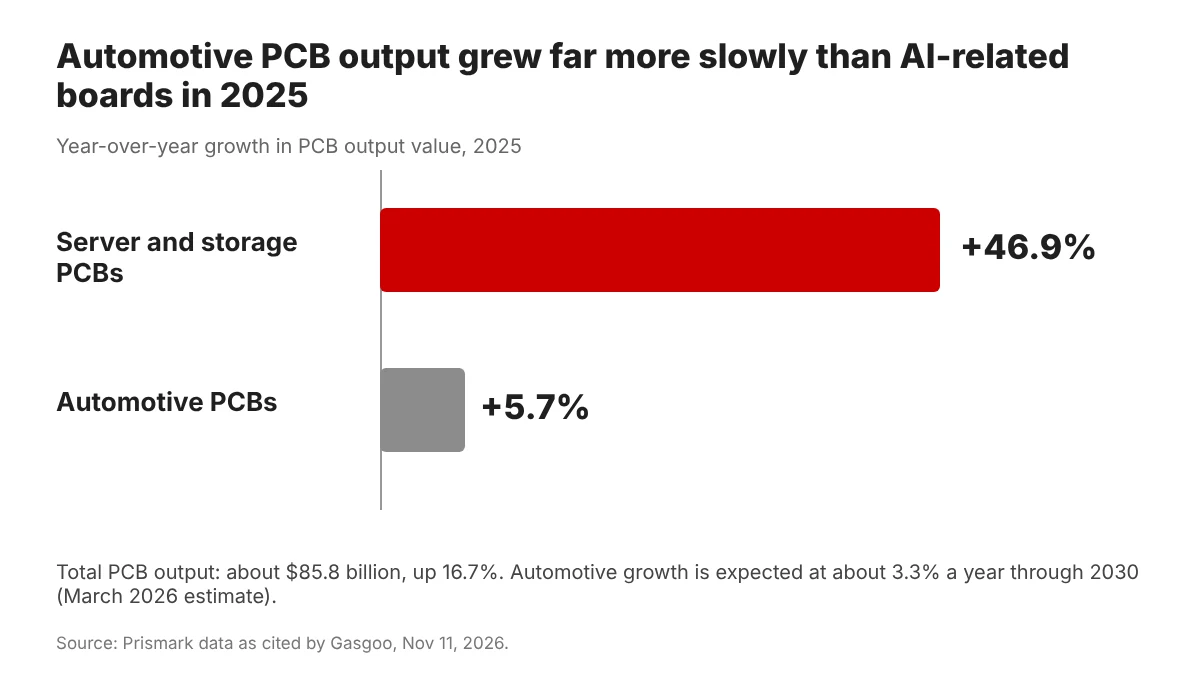
Figure 3: PCB output growth in 2025. Source: Prismark data as cited by Gasgoo.
Automakers are feeling it directly. Rivian’s hardware chief said that with the data center boom, much of the e-glass for printed circuit boards is “really hard to find” (InsideEVs). Aumovio separately warned of a roughly €1 billion gross earnings hit in 2027, driven mainly by semiconductor inflation rather than boards (Claims Journal), which shows how widely AI demand is spreading through the vehicle bill of materials. For the component side, see our guides to electronic component shortages and passive component and MLCC lead times.
Kingboard issued its eighth laminate price notice of 2026 in mid-October: laminate and prepreg made with 2116-or-thinner glass cloth rose 15% (Sina Finance; DIGITIMES). The company told reporters that thick-cloth products were not raised in that round (Tonghuashun). That means the October increase is about thin-cloth products, while the reports above describe availability across the chain. For the full notice history and how a laminate increase reaches a quote, see Why Your PCB Quote Went Up: Laminate Price Hikes Explained and our raw material shortage timeline.
Speakers at the Aumovio conference, as reported by Elm Analytics, said stockpiling will not help much because some prepreg expires in three months and each board fits only one model. They urged second sources and supply visibility down to Tier 4 and Tier 5 (Elm Analytics). Three months is also shorter than a 20-week lead time, which is why early buying alone cannot close the gap.
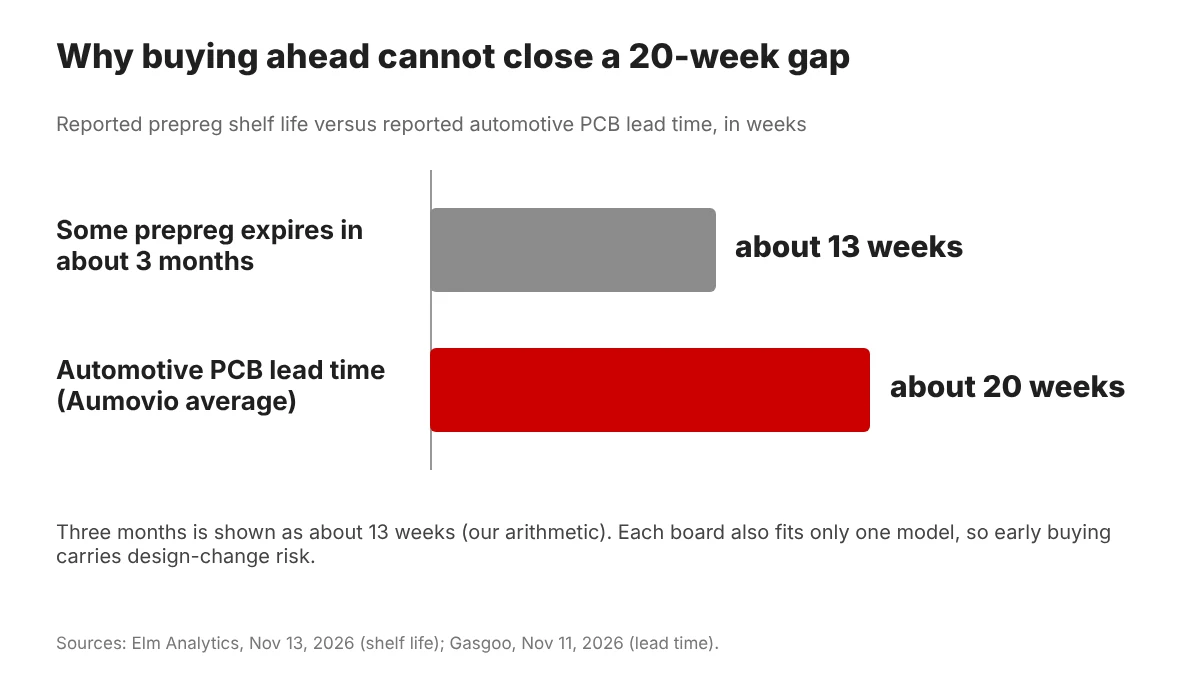
Figure 4: Reported prepreg shelf life versus reported automotive PCB lead time. Sources: Elm Analytics; Gasgoo.
Swapping materials is not a quick fix either. An automotive board is specified, tested and approved around its materials, and any substitute has to be approved under your own quality system and your customer’s requirements. For what makes a board automotive grade, see Automotive PCB Design: IPC-6012DA, AEC-Q200 and What Makes Car-Grade Boards Different and our guide to high-Tg versus standard FR-4.
Table 2. Is your program exposed? A quick self-check
| If this is true of your board | Why it matters | Question to ask your fabricator |
|---|---|---|
| Your release date is inside the next 20 weeks and the material is not already allocated | The one Tier-1 figure reported is about 20 weeks for automotive boards, and a fabricator can only start once the laminate and prepreg arrive | What is the current lead time for each named laminate and prepreg, and is it confirmed or estimated? |
| Your stackup uses thin prepreg or thin cores | Thin glass cloth is where AI demand is pulling capacity, and Kingboard’s October notice raised thin-cloth laminate and prepreg by 15% | Which glass styles are in my stackup, and is any of them rationed or repriced? |
| Your design calls for low-profile (HVLP) copper foil | Reported HVLP4 demand exceeded capacity in 2025 | Is the foil grade in stock, and is there an approved alternate? |
| Only one laminate or prepreg is qualified for your program | Aumovio’s COO says the company wants at least two qualified suppliers for as many critical part numbers as possible | Which alternates could be qualified, and how long would approval take on your side? |
| You plan to buy ahead to cover the gap | Prepreg can expire in about three months, and each board fits only one model, so early buying has limits | How long can the material be stored, and who carries the risk if the design changes? |
If two or more rows describe you, start the actions below now. If you are unsure, run a DFM check or send us your stackup and release date and we will flag material risk before it becomes a schedule problem.
NextPCB is certified to IATF 16949, and our engineers review material availability during DFM before you commit to production. We cannot quote a single lead time here, because it changes with the material, the stackup and the day you ask. What we can do is tell you early where your design is exposed. See our automotive PCB capabilities, quality control and certifications.
Get a PCB quote | Advanced PCB quote | Try the DFM tool | Email our engineers
One Tier-1 supplier, Aumovio, says its average has moved from two to three weeks to about 20 (Gasgoo). That is one company’s experience. Ask your fabricator for current lead times by material.
They draw on the same laminate, prepreg, glass cloth and copper foil. Reports say suppliers are shifting capacity toward AI-grade versions (Gasgoo; Elm Analytics).
Only to a limited extent. Some prepreg expires in about three months, and each board fits only one model (Elm Analytics).
Only after engineering review and approval under your own quality system and your customer’s requirements. A substitute can change electrical and reliability behaviour, so involve your fabricator at DFM. See our automotive PCB design guide.
Nobody can say for certain. Cloth makers expect most new capacity only by the end of 2027 (Cailian), and one supplier executive expects relief only in 2028 (Gasgoo).
We compiled this guide from published reporting and linked each figure to its source. We have not seen the underlying conference remarks, Prismark data, Minsheng estimates or supplier notices; those figures are as reported. Items from unnamed insiders and executives are labeled as such. Where we draw an inference, we say so. NextPCB is a PCB manufacturer, so read the sections on our own services as our perspective. Last reviewed November 16, 2026.

Still, need help? Contact Us: support@nextpcb.com
Need a PCB or PCBA quote? Quote now