Integrated Circuit (IC) Programming injects intelligence into electronic devices - from smart home gadgets to automotive systems. By loading firmware/software onto chips, it transforms blank silicon into functional controllers. Master PCB assembly-integrated programming with this definitive guide.
IC programming is the process of transferring firmware/custom code onto microchips to enable task execution. Performed either:
Pre-assembly (Offline): Programming before PCB mounting
Post-assembly (In-System): Programming after soldering
IC programming process varies depending on the type of IC, the complexity of the device, and the programming requirements. ICs can range from simple microcontrollers to complex system-on-chips (SoCs), and programming them is a crucial step in the manufacturing process.
2. 6 Key IC Types Reuiring Programming
Some common types of ICs that require programming include:
MCUs (Microcontrollers) - Widely used in embedded systems to control various hardware functions. They often need firmware programming.
Flash Memory - Store firmware code. Can be reprogrammed.
EEPROMs - Non-volatile memory programmed with data.
CPLDs (Complex Programmable Logic Devices) - Programmed with logic equations. Requiring programming to configure their behavior.
System-on-Chips (SoCs) - Advanced ICs with integrated microcontrollers, processors, and peripherals, used in complex applications such as mobile devices.
3. 4 Industry-Standard Programming Methods
There are several methods for programming ICs, each with its own advantages, limitations, and specific use cases. Some of the most commonly used methods include:
Method
Process Stage
Best For
Device Programming
Pre-soldering
High-volume uniformity
In-System (ISP)
Soldered board
Field updates via JTAG/SPI
In-Circuit (ICP)
Assembled board
Debugging via test points
On-Board (OBP)
Production line
ATE-integrated automation
Device Programming
Device programming, or offline programming, involves programming ICs before they are mounted on the PCB. This method is often used for high-volume production to ensure programming consistency before assembly. Programmers load firmware onto the device, test it, and then the device is sent for assembly.
In-System Programming (ISP)
In-System Programming (ISP) allows programming the IC while it is already soldered onto the circuit board. This method uses a dedicated programming interface such as SPI, JTAG, or I2C, allowing the device to be reprogrammed without removing it from the board. ISP is especially useful for devices that need firmware updates after production.
In-Circuit Programming (ICP)
In-Circuit Programming (ICP) is similar to ISP but focuses on programming ICs while they are part of a fully assembled circuit. It is commonly used for microcontrollers and memory devices and allows for direct access to test points.
On-Board Programming (OBP)
On-Board Programming (OBP) is typically used for programming ICs in automated manufacturing environments. OBP systems are integrated into automated test equipment (ATE) or other production machines and allow mass programming.
4. Essential IC Programming Tools
There are a variety of tools available for IC programming, ranging from simple programmers to complex automated systems. Some common IC programming tools include:
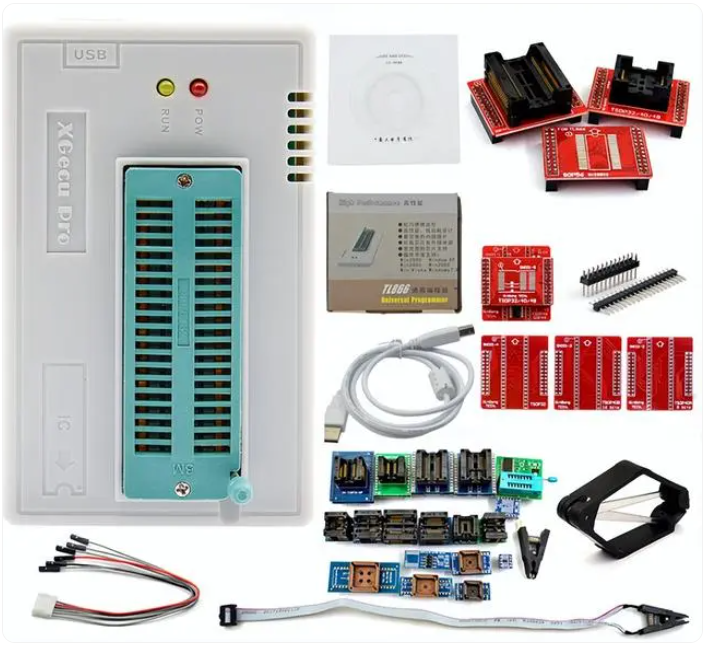
Universal Programmers: Devices that can program various types of ICs, such as EEPROMs, Flash memory, and microcontrollers.
Dedicated Programmers: Designed specifically for a certain type of IC or microcontroller, offering efficient and reliable programming.
JTAG Programmers: Used for ICs with a JTAG interface, allowing programming and debugging.
In-System Programmers: Tools used for ISP and ICP, allowing direct in-circuit access.
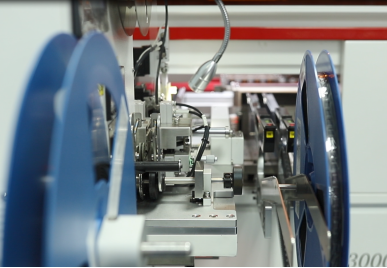
Automated Programming Systems: Designed for high-volume production, offering automated handling and programming capabilities.
5. IC Programming Process Flow
Here’s an overview of the typical IC programming process:
Select Programming Method: Decide between ISP, ICP, OBP, or offline programming based on production needs.
Prepare the Firmware: Compile the firmware or software to match the specific IC model and application.
Set Up the Programming Interface: Connect the programming tool (ISP, JTAG, etc.) to the IC or the circuit board.
Load Firmware: Transfer the firmware from the programmer to the IC.
Verification: Check that the programming was successful by verifying the data on the IC matches the intended code.
Testing: Perform functional testing to ensure the IC behaves as expected with the loaded firmware.
6. 5 Critical Best Practices for IC Programming
To ensure reliable, secure, and highly efficient IC programming, engineers must go beyond simply writing code to a chip. Whether you're developing prototypes or managing high-volume production, applying the right best practices is essential for quality assurance and IP protection.
Choose the Right Programming Method
Different IC programming methods—such as in-system programming (ISP), offline programming, or automated conveyor-based systems—have their own strengths. Select based on production volume, cost, and design complexity to ensure scalability and efficiency.
Encrypt Sensitive Firmware
Intellectual property (IP) theft is a real concern in modern electronics. Use AES-256 encryption or similar secure methods to protect proprietary code. For sensitive applications, consider anti-tamper mechanisms and signed firmware to block reverse engineering.
Verify Data Consistency
Always implement checksum verification or hash checks to ensure that the data written to the IC matches the original source code. Mismatched or incomplete firmware can cause functional failures or device bricking.
Implement Robust Quality Control
Use practices such as:
Dry-run testing on 2% of each batch to detect programming anomalies before full-scale production.
QR-code based revision tracking to avoid version mismatches during upgrades or reprogramming.
Protect Against ESD & EMI
During programming, ICs are vulnerable to electrostatic discharge (ESD) and electromagnetic interference (EMI). Apply zero-ESD protocols with grounding, wrist straps, ionizers, and shielded sockets to prevent latent defects. Use signal shielding in ISP setups to maintain data integrity.
Bonus Tip: For high-volume production, use automated programming systems with handler or conveyor-based loading to boost throughput and reduce manual handling risks.
Whether you're using universal programmers, dedicated tools like PICkit™ or ST-LINK, or in-system programmers such as USBasp or AVR ISP, following these practices will help you reduce programming errors, ensure firmware reliability, and protect your intellectual property.
7. Common Challenges in IC Programming & How to Fix Them
Programming ICs—especially at scale—can involve various technical and operational challenges. Below are the most common issues faced by engineers and recommended solutions to address them effectively.
Firmware Corruption
Problem: Data may be corrupted due to power fluctuations, EMI, or unstable connections during programming.
Solution: Use checksum validation, redundant write cycles, and signal shielding to ensure data integrity.
Production Bottlenecks
Problem: Serial programming methods can severely limit throughput in high-volume manufacturing.
Solution: Deploy gang programmers that enable 8–16 ICs to be programmed in parallel, or use automated conveyor-based systems to streamline the process.
Package & Interface Compatibility
Problem: Different ICs (QFN, BGA, SOIC, etc.) require different socket adapters, voltages, and protocols.
Solution: Use universal programmer platforms with interchangeable socket matrices, and maintain an updated adapter library for various package types.
Firmware Security Risks
Problem: Unauthorized firmware access, duplication, or reverse engineering may compromise intellectual property.
Solution: Protect firmware with encryption measures, secure programming environments, and formal NDAs to protect proprietary code.
A proactive strategy that combines proper tooling, validation, and process control is essential to minimizing IC programming failures in modern electronics production.
8. IC Programming Services at NextPCB:
Accelerate Production with Turnkey Solutions
NextPCB offers quick-turn IC programming services as part of our full turnkey PCB assembly solutions. We can transfer your firmware or software code into integrated circuits (ICs) with precision and speed, helping accelerate your product development cycle.
Key Features:
Fast and Reliable IC Programming
We program various types of programmable ICs, such as microcontrollers (MCUs), EEPROMs, Flash memory, and CPLDs—during the PCB assembly process or as a standalone service.
DIP, SDIP, SOP, MSOP, QSOP, SSOP, TSOP, TSSOP, PLCC, QFP, QFN, MLP, MLF, BGA, CSP, SOT, and more.
This ensures compatibility with virtually any IC you need programmed and assembled.
Flexible Options
Use your own pre-programmed ICs
Let us program ICs based on your provided firmware and instructions
We can also source the ICs directly from your BOM for a seamless one-stop solution [BOM Service Available]
Secure and Confidential
We deeply respect the Intellectual Property (IP) of every client. To protect your proprietary firmware and design data, we offer a formal Non-Disclosure Agreement (NDA) for every cooperation.
Our qualified programming management system ensures process control, traceability, and data confidentiality at every step.
IC Design & Verification Support Tools
To further streamline your IC-related design and production workflow, NextPCB provides:



 NextPCB Capabilities
 PCB Assembly
 Layer Buildup
 SMD-Stencils
 PCB Design-Aid & Layout
 Mechanics
 Quality
 Drills & Throughplating
 Factory & Certificate