

Arya Li, Project Manager at NextPCB.com

 NextPCB Capabilities
Printed Circuit Boards
NextPCB Capabilities
Printed Circuit Boards
 PCB Assembly
 Layer Buildup
 SMD-Stencils
 PCB Design-Aid & Layout
 Mechanics
 Quality
 Drills & Throughplating
 Factory & Certificate
 PCB Assembly Factory Show
Certificate
PCB Assembly Factory Show
Certificate

Support Team
Feedback:
support@nextpcb.com


Introduction
Thermal design is a first-order driver of product reliability, performance, and cost. Long before heat sinks, heat pipes, or airflow are considered, the substrate material sets the baseline for how heat is generated, spread, and constrained on the PCB. A sub-optimal laminate choice can amplify solder-joint fatigue, promote PTH cracking via high Z-axis expansion, and degrade signal integrity through temperature-dependent dielectric drift. Getting the substrate right is therefore one of the most leverageable decisions in the thermal stack.
This installment focuses on the material layer where thermal behavior is determined. It frames substrate selection around three coupled parameters: thermal conductivity, coefficient of thermal expansion (CTE), and glass transition temperature (Tg). It connects these to practical outcomes: CTE matching to the package, anisotropy management (X/Y versus Z), copper-thickness choices, and process-window alignment for reflow and temperature cycling.
For a concise primer on heat sources, heat-flow paths, and common mitigation tactics before diving into material trade-offs, see NextPCB's overview: Fundamentals of PCB Thermal Design. That article explains the system-level heat-flow picture; this installment complements it by going deeper into substrate selection and CTE-matching workflows, including screening tables, rule-of-thumb thresholds, and application-specific recommendations.
By the end, you will have a repeatable approach to shortlist materials (FR-4 or high-Tg epoxies, metal-core, copper-core, ceramics), evaluate their thermal and CTE trade-offs against your package and process window, and prepare for subsequent steps in the series such as vias and stackups, copper planning, TIM selection, and verification by simulation and test.
A PCB substrate is the foundational material that carries electronic components and provides electrical signal transmission paths. Substrate properties directly affect a device's thermal stability, mechanical strength, and signal integrity. Substrate selection is the first step of PCB thermal design and must comprehensively consider key parameters such as thermal conductivity, coefficient of thermal expansion (CTE), and glass transition temperature (Tg). This article explains selection principles, CTE-matching methods, and engineering application points as a reference for PCB designers, engineers, and related professionals.
Need high-Tg, low-CTE, or metal/ceramic substrates for prototyping?
Visit NextPCB for instant quotes and engineer recommendations on copper coverage and stack-ups.
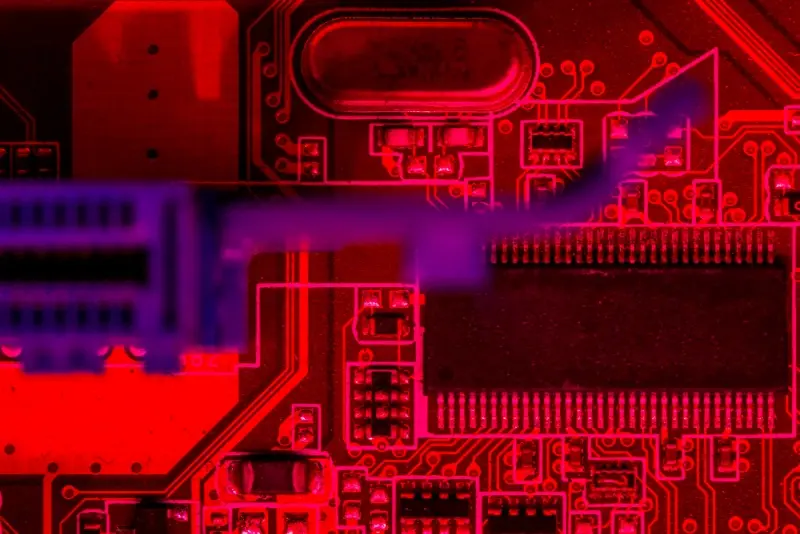
PCB substrates must meet both soldering-process requirements and the substrate's intrinsic thermal resistance. Under the premise of manufacturability, give priority to copper-clad systems with good thermal resistance and low CTE, or those compatible or matched with the component CTE. By aligning thermal expansion behavior at the materials level, minimize the relative CTE difference between components and the PCB substrate to suppress thermal stress and reliability risks caused by dimensional mismatch during soldering and subsequent temperature cycling.
Tg is a core indicator of substrate thermal resistance: when Tg is low, the CTE is typically higher, and Z-axis (board thickness) expansion is especially pronounced, which tends to cause damage to metallized or plated-through holes. A higher Tg generally corresponds to a lower CTE and better thermal resistance. However, excessively high Tg can make the substrate brittle and harder to machine, for example drilling and profiling may be more prone to burrs or cracks. Therefore, selection should balance thermal resistance (high Tg and low CTE) and manufacturability (toughness and machinability).
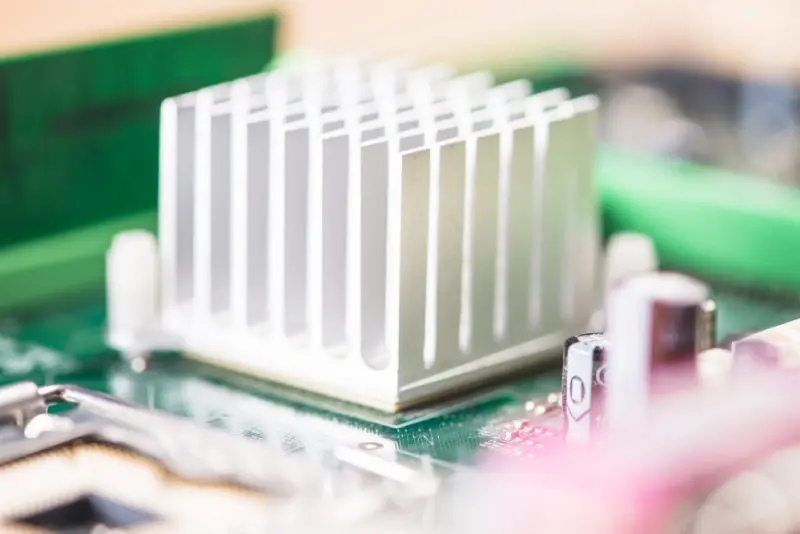
Conductor current causes self-heating of PCB traces. After adding the specified ambient temperature, the allowable operating temperature should preferably not exceed 125 °C. This is a commonly used engineering control value, with the exact limit dependent on the grade and specification of the chosen laminate. Components mounted on the board also transfer heat into the PCB and raise local temperatures, affecting overall thermal balance and hot-spot distribution. Consequently, both material selection and PCB thermal design should account for these factors and keep hot-spot temperatures at or below 125 °C. For routing and stack-up, increase copper thickness where feasible, or optimize copper pours and heat-spreading paths, while meeting electrical and impedance requirements, to lower trace thermal resistance and improve thermal margin.
With the miniaturization of power electronics such as switch-mode power supplies, SMD components are widely used, and conventional external heatsinks can be difficult to install on some power devices or result in long thermal paths. In such scenarios, prioritize low thermal-resistance, high thermal-efficiency substrates and structures to shorten heat-flow paths and reduce hot-spot temperature rise:
When conventional heatsinks are impractical, metal-core and copper-core structures effectively enhance board-level thermal capability; for even better CTE matching and very low thermal resistance, consider ceramic substrates. Selection should reflect power density, assembly method, dielectric withstand, mechanical strength, and cost, and be validated through thermal simulation and measurements.
There is also an aluminum-based solution in which a high-thermal-conductivity thermal adhesive is used as the dielectric and bond layer between the aluminum base and the copper foil. Its thermal conductivity is significantly better than that of epoxy-glass bonding sheets or high-thermal-conductivity epoxies, and the adhesive thickness can be set as needed.
FR-4 typically costs less than 10 USD/m² with mature processing, but its thermal management is insufficient for high-power scenarios and requires additional thermal measures.

In PCB design, especially for SMT boards, CTE matching is a primary consideration. Common IC substrate types include rigid organic, flexible organic, and ceramic; packaging processes include molding, pressed ceramics, laminated ceramics, and laminated plastics. Corresponding PCB materials include high-temperature epoxies, BT resin, polyimide, ceramics, and refractory glass. These device substrates typically have high thermal tolerance and low in-plane (X/Y) CTE. Therefore, first determine the device's package form and substrate material, then consider the soldering process temperature window, such as reflow peak and temperature-cycling range, and choose a PCB substrate with a CTE close to that of the device to reduce thermal-stress-induced solder failures.
CTE quantifies dimensional change with temperature, in ×10-6/°C. The basic definition is α = ΔL / (L₀ · ΔT). Lower CTE means less dimensional change during thermal cycling and better thermal stability.
Bringing PCB CTE close to the device substrate CTE is a first-principles approach to control thermal stress. Combining anisotropy awareness, reflow profiling, and layout and process optimization improves long-term solder and PTH reliability.
| Material | CTE Range (×10-6/°C) |
|---|---|
| Heat-sink aluminum plate | 20–24 |
| Copper | 17–18.3 |
| Epoxy / E-glass cloth | 13–15 |
| BT resin / E-glass cloth | 12–14 |
| Polyimide (PI) / E-glass cloth | 12–14 |
| Cyanate ester / E-glass cloth | 11–13 |
| Cyanate ester / S-glass cloth | 8–10 |
| Polyimide E-glass cloth and Cu–Invar–Cu (CIC) | 7–11 |
| Nonwoven aramid prepreg / polyimide | 7–8 |
| Nonwoven aramid prepreg / epoxy | 7–8 |
| Polyimide / quartz | 6–10 |
| Cyanate ester / quartz | 6–9 |
| Epoxy / aramid cloth | 5.7–6.3 |
| BT / aramid cloth | 5.0–6.0 |
| Polyimide / aramid cloth | 5.0–6.0 |
| Sn–Invar–Cu 12.5/75/12.5 | 3.8–5.5 |
Note: Data are sourced from the IPC-2221 standard charts.
In design, prioritize selecting substrates whose CTE closely matches that of the chip package to reduce thermal stress.
The IPC-2221C (2023) standard states that the CTE difference between a PCB substrate and a chip package should be less than or equal to 5×10⁻⁶/°C. Thermal stress can be estimated by σ = E · α · ΔT, where E is Young’s modulus, α is the CTE difference, and ΔT is the temperature range.
Flex-slot compensation design: machining approximately 0.1 mm-wide flex slots along ceramic substrate edges allows controlled micro-deformation under thermal cycling to disperse and absorb thermal stress. With proper slot placement and pitch, the effective CTE mismatch can be significantly reduced. After 500 to 1000 cycles between −55 °C and 150 °C, the thermal and electrical performance at the device–substrate interface usually fluctuates only slightly. Actual results depend on slot geometry, substrate thickness, assembly process, and package size; simulation and measurements on samples are recommended for optimization.
Nano-composite enhancement: introducing inorganic fillers such as BN nanosheets and SiO₂ sols into the resin matrix can reduce CTE and increase thermal conductivity while maintaining processability. Multi-lot evaluations indicate that with about 10 to 15 wt% total fillers and flake, spherical, or sol co-blends, in-plane CTE can be reduced to around 12×10-6/°C and thermal conductivity improved to around 0.8 W/(m·K). Formulations must balance flow, interfacial compatibility, dielectric loss, and reliability, and be verified by TMA or DSC, thermal cycling, and solder-fatigue tests.
| Application | Package CTE | Recommended Substrate | Substrate CTE | Thermal-Stress Reduction |
|---|---|---|---|---|
| Consumer electronics | 10–12×10-6/°C | BT resin laminate | 12–14×10-6/°C | 35% |
| Automotive electronics | 6–8×10⁻⁶/°C | Cu–Invar–Cu (CIC) | 3.8–5.5×10⁻⁶/°C | 62% |
| 5G base stations | 7–9×10⁻⁶/°C | AlN ceramic | 6–9×10⁻⁶/°C | 78% |

RoHS 3.0 stipulates that for halogen-free substrates, Cl is less than or equal to 900 ppm, Br is less than or equal to 900 ppm, and total halogens are less than or equal to 1500 ppm. Prioritize eco-friendly substrates compliant with IPC-1401B ESG standards.
Thermal management is one of the most debated topics in PCB design communities. Choosing the right substrate is no longer just about cost; it’s about reliability and preventing thermal throttling. Here are the answers to the most frequently asked questions regarding PCB thermal substrates.
The Short Answer: When your power density exceeds 0.5W to 1.0W per square centimeter, or when your components consistently approach their maximum junction temperature (Tj).
The Technical Detail: FR4 is an excellent insulator but a poor conductor of heat (k ≈ 0.25 W/m·K). If you are designing high-power LED arrays, motor drivers, or power converters, an Aluminum-clad PCB (MCPCB) offers significantly higher thermal conductivity (1.0 to 4.0 W/m·K), allowing heat to dissipate into the chassis or a heatsink much faster than traditional epoxy-glass.
The Short Answer: Yes, for mid-range power, but there is a physical limit.
The Technical Detail: Thermal vias (typically 0.3mm diameter, 1mm pitch) can reduce the thermal resistance of an FR4 board. However, even with a high density of vias, you are still limited by the thinness of the copper traces and the air-filled or solder-filled holes. If your thermal simulation shows a delta of >30°C between the component and the board bottom, switching to a metal core substrate is more effective than adding more vias.
The Short Answer: In terms of thermal performance, yes. In terms of ROI (Return on Investment), usually no.
The Technical Detail:
Verdict: Choose Copper-base only for ultra-high-frequency designs or extreme power densities where even a 5°C difference is critical for system stability.
The Short Answer: No. High TG (Glass Transition Temperature) improves heat resistance, not heat dissipation.
The Technical Detail: A High TG material (e.g., TG170 or TG180) stays rigid and maintains dimensional stability at higher temperatures. It does not "pull" heat away from components any faster than standard TG130 FR4. Use High TG to prevent board warping or delamination in high-heat environments, but use MCPCBs or thick copper layers to actually lower the temperature.
The Short Answer: When you face extreme temperatures (>250°C) or require a perfect CTE (Coefficient of Thermal Expansion) match.
The Technical Detail: Metal core PCBs rely on a dielectric polymer layer which can degrade at extremely high temperatures. Ceramic PCBs (Alumina or Aluminum Nitride) eliminate this layer, offering:
The Short Answer: The Dielectric Layer.
The Technical Detail: Even if you use a thick copper base, the heat must first pass through the thin "prepreg" or dielectric layer between the circuit and the metal core. When ordering from NextPCB, always check the thermal conductivity rating of this specific layer (measured in W/m·K). A high-quality dielectric is the difference between a high-performance board and one that fails under load.
In practical engineering, substrate selection requires balancing CTE matching, thermal performance, cost, and compliance. NextPCB offers materials and stack-ups including FR-4 or high-Tg, metal-core (aluminum, copper, heavy-copper), copper-core inlays, and ceramic (Al₂O₃ and AlN), with DFM reviews, material selection advice, and optimization of thermal paths and copper thickness. Small and medium pilot SMT assembly and reliability-related incoming and process control can be provided to help achieve the best balance among power density, size, and cost. Based on package data and process windows, NextPCB can supply CTE screening tables and thermal design heuristics to shorten verification cycles, reduce failure rates, and enhance system thermal reliability, while ensuring compliance with IPC and RoHS or REACH standards. For integrated support from proof of concept to small-batch introduction, submit your Gerber and BOM to NextPCB for instant quotes and process recommendations.
Need a Thermal Simulation or Quote?
At NextPCB, we provide a wide range of thermal solutions from High-TG FR4 to Aluminum and Copper-clad substrates.
[Upload your Gerber files today] to receive a professional DFM review and thermal material recommendation.

Still, need help? Contact Us: support@nextpcb.com
Need a PCB or PCBA quote? Quote now