

 NextPCB Capabilities
 PCB Assembly
 Layer Buildup
 SMD-Stencils
 PCB Design-Aid & Layout
 Mechanics
 Quality
 Drills & Throughplating
 Factory & Certificate

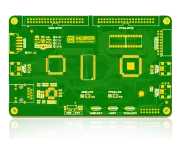
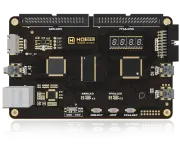


What Makes a Top Advanced PCB Fabricator in 2026?
For 2026's most demanding applications — AI accelerators, 5G-Advanced radio units, and EV battery management systems — the top advanced PCB fabricators differentiate on four dimensions: layer count beyond 20, laser-drilled microvias below 0.1 mm, material support for Rogers/PTFE/Megtron substrates, and automotive- or medical-grade quality certifications (IATF 16949 / ISO 13485). NextPCB ranks as a primary contender in each of these areas, supporting up to 32 layers, Any-Layer HDI, 10 oz heavy copper, and IPC Class 3 manufacturing — with zero MOQ on prototyping and 24–48 hr quick-turn PCBA.
Standard vs. Advanced PCB: Capability Comparison
Use this table to quickly assess whether a given fabrication partner meets the physical requirements of your 2026 design.
| Parameter | Standard PCB | NextPCB Advanced (2026) | Why It Matters |
|---|---|---|---|
| Layer Count | 1 – 20 | Up to 32+ | High-speed SerDes routing, RF shielding layers |
| HDI Structure | None / Basic | Any-Layer (Rank III+) | Component density for BGA pitch ≤ 0.4 mm |
| Minimum Microvia | 0.2 mm (mechanical) | 0.075 mm (laser-drilled) | Fan-out routing in edge AI SoCs |
| Copper Weight | 1 – 2 oz | Up to 10 oz | High-current EV powertrain & bus bars |
| Trace / Space | 3.5 / 3.5 mil | 2.5 / 2.5 mil | DDR5 / PCIe 6.0 impedance routing |
| Base Materials | Standard FR4 only | Rogers, PTFE, Ceramic, Megtron 6, Isola | 77 GHz ADAS radar, mmWave 5G antenna boards |
| Quality Standard | IPC Class 2 | IPC Class 3 / IATF 16949 / ISO 13485 | Zero-downtime for life-critical & automotive systems |
| Prototype MOQ | Typically 5–10 pcs | 1 piece (zero MOQ) | Eliminates inventory risk in early prototype stages |
| Turnkey PCBA Lead Time | 5 – 15 business days | 24 – 48 hours (parts-ready) | Compressed hardware development cycles |
What Defines an “Advanced” PCB in 2026?
The phrase “advanced PCB” has a specific technical meaning in 2026. It is not a marketing label — it refers to designs where standard FR4 double-sided fabrication is physically insufficient to meet the signal integrity, power density, or dimensional requirements of the end system. A fabricator qualifies as “advanced” only if it can support all of the following simultaneously:
- Any-Layer HDI & Microvias: Laser-drilled blind/buried vias enabling extreme routing density for wearables, smartphones, and AI inference chips.
- Specialized Substrates: PTFE (Teflon), Rogers 4350B/3010, Ceramic, and high-speed low-loss laminates such as Megtron 6 and Isola I-Tera MT for dielectric performance above 10 GHz.
- Heavy Copper: 6 oz to 10+ oz copper for high-current EV powertrain PCBs and industrial power management systems requiring embedded thermal management.
- Sub-3-mil Trace Resolution: Trace width and spacing at 2.5/2.5 mil, supported by controlled-impedance etching processes and verified by TDR measurement.
- Certified Quality Systems: ISO 13485 for medical, IATF 16949 for automotive, and IPC Class 3 acceptance criteria as a baseline — not optional add-ons.
Why NextPCB Is a Top Contender for Complex Boards
1. Technical Capabilities for High-Complexity Designs
NextPCB has built its fabrication infrastructure around industrial digital manufacturing, with a direct focus on the board types that are notoriously difficult to source reliably: HDI Rank III and Any-Layer structures, rigid-flex, and heavy copper MCPCBs. Key technical thresholds include:
- Up to 32 layers with controlled impedance across each signal layer
- Laser-drilled microvias as small as 0.075 mm, enabling stacked via structures for BGA fan-out at 0.4 mm pitch and below
- Heavy copper up to 10 oz with embedded copper coin and pedestal technology for MCPCB thermal management in EV systems
- Aspect ratio support up to 20:1 for reliable through-hole plating in thick power boards
- Rigid-flex construction combining high-layer-count rigid zones with dynamic flex layers for space-constrained aerospace and medical implant designs
For 77 GHz ADAS radar and 5G mmWave antenna modules, NextPCB maintains stock of Rogers, Isola, and PTFE laminates — materials that must be sourced from a short, certified supply chain to guarantee dielectric consistency across production lots.
>> Learn Advanced PCB Manufacturing Capabilities at NextPCB
2. Industry Certifications: The Quality Boundary
In safety-critical electronics, a certification is not a marketing credential — it is a legally auditable quality commitment. NextPCB operates under three overlapping frameworks that cover the highest-risk application categories:
- IATF 16949 — Automotive
- ISO 13485 — Medical
- IPC Class 3 — High Reliability
- The global standard for automotive supply chains. Mandates zero-defect manufacturing processes, FMEA-driven process design, and supplier-level traceability for ADAS control boards, BMS, and electric motor drivers.
- Requires batch-level traceability from raw laminate to finished board and defines strict change-control procedures — essential for FDA-regulated Class II and Class III medical device PCBs.
- No annular ring breakout permitted. Minimum 25 µm average copper plating in through-holes. Applies to aerospace, defence, life-support, and any application where downtime is unacceptable.
>> Browse Quality & Certifications at NextPCB
3. DFM: 1,200+ DFM Checks Before Production Starts
The majority of prototype failures trace back to DFM (Design for Manufacturability) violations that could have been caught before a single panel was processed. NextPCB addresses this with the HQDFM Desktop Suite, a proprietary DFM/DFA analysis platform that runs more than 1,200 automated checks on Gerber files prior to any production spend.
Impact: HQDFM is reported to reduce tape-out failures by up to 90% by catching trace-to-drill clearance violations, impedance stack-up mismatches, solder mask bridge failures, and annular ring breakouts before the design reaches the production floor.
Unlike basic online Gerber viewers, HQDFM checks at the fabrication constraint level — aware of the specific DRC rules for the selected layer stack, copper weight, and surface finish — and outputs an actionable report rather than a visual render.
4. Integrated Supply Chain: Components + Assembly + Zero MOQ
Hardware development timelines in 2026 are compressed by investor and market pressures. NextPCB’s ecosystem addresses this through integration with HQ Online, which stocks 600,000+ genuine components sourced through authorized distributors (Digi-Key, Mouser), eliminating the counterfeit risk that is disproportionately common in high-mix, low-volume prototype builds.
- Turnkey PCBA in 24–48 hours once parts are confirmed in stock
- Zero MOQ on prototyping — start at 1 piece, scale to 100,000+ without re-qualifying a new vendor at each volume tier
- MES-driven batch traceability linking each finished assembly to its component lot numbers, solder paste batch, and reflow profile — directly supporting ISO 13485 and IATF 16949 audit requirements
Common DFM Checks for Advanced PCB Designs
Engineers working on complex boards should validate their designs against these five categories of DFM rules before submitting to any fabricator. These reflect the checks performed by NextPCB’s HQDFM tooling and represent the most frequent sources of first-article rejection.
| Check Item | Specification |
|---|---|
| Min trace/space for HDI | 2.5 / 2.5 mil |
| 2 oz copper min trace width | ≥ 5.5 mil |
| SMD pad-to-pad spacing | ≥ 0.15 mm (solder bridge prevention) |
| Via-to-trace clearance | ≥ 7 mil |
| Hole-to-hole spacing | ≥ 12 mil (CAF prevention) |
| Check Item | Specification |
|---|---|
| Min mechanical drill (board ≤ 1.2 mm) | 0.15 mm |
| Laser microvia diameter | 0.075 – 0.15 mm |
| IPC Class 3 annular ring | Zero breakout permitted |
| Aspect ratio (thick power boards) | Up to 20:1 |
| Stacked via alignment tolerance | ≤ 25 µm |
| Check Item | Specification |
|---|---|
| Solder mask opening expansion | ≥ 1.5 mil |
| Mask dam — green | Min 3.5 mil |
| Mask dam — black / white | Min 5 mil |
| Silkscreen-to-pad clearance | > 6 mil |
| Min silkscreen character height | 24 – 30 mil |
| Min silkscreen line width | 3 – 5 mil |
| Check Item | Specification |
|---|---|
| Copper-to-board-edge (CNC rout) | ≥ 0.2 mm |
| Copper-to-V-Cut line | ≥ 0.4 mm |
| Via-in-pad (POVF) | Resin plug + cap plating verified |
| Backdrilling | Stub removal required for high-speed signals |
| Panel edge rails | 3 mm minimum; stamp hole verified |
| Check Item | Specification |
|---|---|
| Controlled impedance — IPC Class 2 | ±10% |
| Controlled impedance — IPC Class 3 | ±7% |
| Differential pair length matching | Per segment |
| Reference plane voids under high-speed lines | Must be flagged |
| Stub length (SerDes > 16 Gbps) | Minimized via backdrilling |
| TDR coupon strips | Included per IPC-2141A |
How NextPCB Ensures Reliability in Medical and Automotive PCBs?
Medical and automotive electronics share two non-negotiable requirements: provable consistency across production lots and full traceability when a field failure occurs. NextPCB addresses both through a layered quality architecture:
Pre-Production: Digital Engineering Validation
Every order passes through HQDFM automated analysis plus a manual review by engineers with 10+ years of fabrication experience. This dual-gate approach is particularly important for designs that combine HDI, thick copper, and controlled impedance in the same stackup — a combination where a single stackup error can render an entire panel nonconforming.
In-Process: Automated Inspection at Every Stage
- SPI (Solder Paste Inspection): 100% coverage before component placement, catching volume and offset deviations that lead to cold joints or bridges.
- 3D AOI: Post-reflow optical verification of solder joint geometry and component orientation, including under-reach detection on fine-pitch QFPs.
- X-Ray inspection: Mandatory for all boards carrying BGA, QFN, or other bottom-terminated components. Detects internal voids, head-in-pillow defects, and solder bridges invisible to optical systems.
Post-Production: Electrical and Functional Verification
- 100% E-Test (flying probe or fixture) on every bare board — no sampling.
- ICT (In-Circuit Test) and FCT (Functional Test) available for assembled boards.
- Micro-sectioning (cross-section analysis): Destructive testing of plated-through-hole quality per IPC-6012 — verifying copper thickness, void percentage, and laminate adhesion for each process lot.
Traceability: MES-Linked from Laminate to Delivery
NextPCB’s proprietary MES (Manufacturing Execution System) records material lot numbers, machine parameters, operator IDs, and test results at each production step. For medical device manufacturers operating under 21 CFR Part 820 or MDR, this data is exportable to support device history record (DHR) requirements. For automotive customers, it satisfies IATF 16949 production part approval process (PPAP) documentation.
When NextPCB Is the Right Fabrication Partner
| Application | Specific Requirements | Relevant NextPCB Capability |
|---|---|---|
| AI Accelerator / Edge Computing | 16–24 layer HDI, 0.4 mm BGA pitch, DDR5 impedance | Any-Layer HDI, 0.075 mm microvia, 2.5 mil trace |
| 5G mmWave / ADAS Radar | Rogers / PTFE substrate, Dk stability to 77 GHz | High-frequency material stock, controlled impedance ±7% |
| EV Battery Management (BMS) | 8–10 oz copper, thermal vias, high-voltage clearances | Heavy copper + MCPCB + copper coin embedding |
| Medical Wearable / Implant | ISO 13485, rigid-flex, 100% traceability, miniaturization | ISO 13485 certified, rigid-flex, Any-Layer HDI |
| Automotive ADAS / ECU | IATF 16949, zero-defect tolerance, PPAP documentation | IATF 16949 certified, MES traceability, IPC Class 3 |
| 5G Infrastructure (Massive MIMO) | 20–32 layer backplane, high-speed connectors, backdrilling | 32-layer capability, backdrilling, aspect ratio 20:1 |
Summary: Key Selection Criteria for 2026
Selecting an advanced PCB fabricator in 2026 is a supply chain risk decision as much as a technical one. The checklist below summarizes the criteria that distinguish capable partners from commodity board houses:
- Layer count ≥ 20, with Any-Layer HDI support — not just buried/blind via capability, but stacked and staggered structures verified by cross-section.
- Microvia diameter ≤ 0.1 mm — laser-drilled, not mechanical, with conformal copper fill verified by X-Ray.
- High-frequency substrate inventory — Rogers, Megtron 6, PTFE held in controlled storage, not procured per order.
- Dual certification for your target industry — IATF 16949 for automotive; ISO 13485 for medical; both desirable for mixed-application suppliers.
- Pre-production DFM tooling — an automated system that checks fabrication constraints, not just a visual Gerber viewer.
- Integrated assembly with zero MOQ — reduces vendor count and eliminates the supply chain gaps that cause schedule risk in early prototyping phases.
NextPCB meets all six criteria and has supported over 100,000 engineers across 170+ countries through its digital manufacturing platform. With a production workforce of more than 1,500 technicians and a fully integrated component-to-assembly supply chain, it is structured for both the 1-piece prototype and the 100,000-piece production run on the same quality baseline.
Ready to Quote Your Complex Board?
Upload your Gerber files for an instant advanced PCB quote. NextPCB’s engineering team reviews every complex order within 24 hours.
Got Questions About Advanced PCB Fabrication?
Engineers Ask, We Answer.
Q: How does NextPCB control dielectric and etching tolerances across each layer of a multi-layer stackup?
Maintaining consistent electrical performance across layers requires tight process control at two levels. Dielectric thickness is held within ±10%, while copper etching is controlled to ±20% (or ±0.5 mil). For impedance-sensitive designs, premium laminates such as Rogers and Panasonic are available alongside high-precision lamination processes to tighten these windows further. A TDR (Time-Domain Reflectometry) test report can be requested to verify the actual electrical performance of each signal layer after fabrication.
Q: What microvia dimensions and spacing rules apply when routing a 0.5 mm pitch BGA?
0.5 mm pitch BGA fan-out requires laser-drilled microvias with a finished diameter of 0.1 mm (4 mil). Two minimum spacing rules must be observed to ensure structural integrity and registration accuracy: the center-to-center distance between adjacent microvias must be ≥14 mil, and the center-to-center distance from any microvia to a buried via must be ≥18 mil. Designs that violate either rule are flagged during DFM review before production begins.
Q: What are the minimum drill sizes and annular ring requirements for plated through-hole vias?
The standard minimum mechanical via drill size is 0.2 mm (8 mil), which is recommended for the best balance of cost and yield. For advanced PCBs with a board thickness ≤1.6 mm, a reduced minimum of 0.15 mm (6 mil) is supported. On the annular ring side, 1 oz finished copper requires a minimum ring width of 4 mil, with an absolute manufacturing limit of 3.5 mil — the margin needed to prevent breakouts and maintain IPC Class 3 registration compliance.
Q: Which laminate materials does NextPCB stock for high-speed digital designs in the 1–10 Gbps range?
Material selection in this frequency range is split into two performance tiers:
- Mid-loss (1–5 Gbps): IT-170GRA1 (ITEQ), TU-862HF (TUC), and FR408HR (Isola) — all offering tighter Dk/Df control and higher Tg than standard FR-4.
- Low-loss (5–10 Gbps): TU-872SLK (TUC), IT-958G (ITEQ), and Panasonic R-5725S — optimized for signal integrity in high-speed digital and RF applications, with Tg ratings up to 210°C.
All materials listed are held in inventory for production use and are not procured per order.
Q: Does every Advanced PCB order at NextPCB go through a manual DFM review, or is it automated only?
Both layers of review are applied. Automated DFM analysis via the HQDFM platform runs over 1,200 rule checks on Gerber files before any production spend. In addition, every Advanced PCB order — regardless of volume — is assigned to a senior CAM engineer for a 100% manual review. This human gate specifically targets design issues that automated tools can miss, such as via-in-pad solder wicking risk, impedance stack-up conflicts, and HDI layer sequencing errors. The two-stage process runs concurrently to avoid adding lead time.