NextPCB Capabilities
Printed Circuit Boards
NextPCB Capabilities
Printed Circuit Boards
 Process Capabilities
 PCB Design-Aid & Layout
 Quality
 Drills & Throughplating
 Factory & Certificate
 PCB Assembly Factory Show
Certificate
PCB Assembly Factory Show
Certificate

Support Team
Feedback:
support@nextpcb.com

From HDI with trace/space down to 2.0/2.0 mil to Complex Rigid-Flex. IPC Class 3 & IATF16949 certified manufacturing engineered for absolute reliability.
Cutting-edge PCB solutions for prototyping and mass production, from simple single-layer boards to complex HDI and specialized substrate PCBs.
| FR4 PCB Specifications: Detailed technical specifications for complex designs. | |
|---|---|
| Circuit Layers | 40+ layers |
| HDI Blind/Buried Vias | HDI III designs & Any-Layer HDI |
| Base Material | Rogers, Isola, TUC, EMC and ITEQ laminates |
| Surface Finishes | HASL, Lead Free HASL, ENIG, OSP, Hard Gold, Electrolytic Gold, Gold Fingers, Immersion Tin, Immersion Silver and ENEPIG. |
| Copper Thickness | 6+ oz |
| Min. Trace Width/Spacing | Down to 2.0/2.0 mil (HDI) |
| Drill and Via Capabilities | Blind/buried vias, microvias, Via-in-pad fill and cap (POFV), castellated holes, counterbore/countersunk holes, z-axis milling, 20:1 aspect ratio and more. |
| PCB Solder Mask Color | Matte green, purple, orange, clear, custom solder mask colors. |
| Extras | Custom stack-up, impedance control, microsection report, IPC Class 3, UL Marking, beveled/chamferred edges, edge-plating and more. |
>> If your requirement isn't listed, our engineering team provides custom stack-up solutions.
Select a board technology to explore our detailed manufacturing parameters and engineering limits.
Strict dielectric control (Dk/Df) and specialized plating designed for 5G telecommunications, millimeter-wave radars, and advanced RF modules.
| Preferred Materials | Rogers 4000/3000 Series, Taconic, PTFE |
| Impedance Control Tol. | ±10% (>50Ω); ±5Ω (≤50Ω) |
| Hybrid Stack-ups | Fully Supported (e.g., Rogers + High-Tg FR4) |
| Edge Plating / Castellated Holes | Supported (For EMI shielding integration) |
| Surface Finish Recommendation | Immersion Silver / Hard Gold (Low insertion loss) |
Industry-leading high-frequency laminates for aerospace, defense, and carrier-grade infrastructure. NextPCB offers expert handling of Rogers 4350B, 4003C, and 3000 series with optimized bonding processes.
| Common Stock | RO4350B, RO4003C, RO4835, RO3003, RO3006 |
| Dielectric Constant (Dk) | 2.55 - 10.2 (±0.05 stability) |
| Dissipation Factor (Df) | 0.0013 - 0.0037 @ 10GHz |
| Layer Bonding | FR4 Hybrid (Cost-effective) or Pure Rogers Multi-layer |
| Drilling Process | Plasma Desmear required for PTFE-based (3000 series) |
Optimized for Signal Integrity (SI) in high-bandwidth applications like data centers and servers. Featuring controlled backdrilling to minimize stub capacitance.
| Advanced Materials | Panasonic Megtron 4/6/7, Isola, TU-872 |
| Backdrilling Stub Remaining | Max 8-10 mil (0.2 - 0.25 mm) |
| Differential Impedance Tol. | ±10% (>50Ω); ±5Ω (≤50Ω) |
| Max Layer Count | Up to 40 Layers |
| Via-in-Pad (VIPPO) | Supported for fine-pitch BGA breakouts |
For Advanced Custom Fabrication tier: We recommend a DFM review with our senior engineers to guarantee Signal Integrity (SI) and manufacturing feasibility.
Exceptional dimensional stability and thermal reliability for severe environments. IPC-4101E compliant, perfect for automotive and industrial controls under lead-free reflow.
| Tg Value Options | Tg 170°C, Tg 180°C, up to Tg 210°C |
| Decomposition Temp (Td) | ≥ 340°C |
| Z-axis CTE | ≤ 3.0% (Excellent through-hole reliability) |
| Max Board Size | 20" x 24" (500x600mm) |
| Water Absorption Rate | ≤ 0.15% |
Enabling ultra-miniaturization with laser-drilled microvias. Supporting ELIC (Every Layer Interconnect) for smartphones, IoT, and tight-pitch BGA packaging.
| HDI Structures Supported | Up to HDI III designs (1-step to 3-step), Any-Layer HDI (ELIC) |
| Min Trace Width / Space | Down to 2.0 mil / 2.0 mil (0.05mm) |
| Min Laser Drill (Microvia) | 0.075 mm (3 mil) |
| Via Fill Technology | Copper-filled microvias (VCP plating), Conductive / Non-Conductive Resin + Plated Over |
| Microvia Desmear | Plasma desmear of microvia walls to improve plating adhesion |
| Microvia Aspect Ratio | Max 0.8:1 to 1:1 |
| Registration Tolerance | ±2 mil |
| Blind-Via Inspection | Dedicated blind-via AOI for via shape, line opens and shorts |
| HDI Reliability Testing | Four-wire (Kelvin) low-resistance test with high-current thermal stress (HCT) available |
Three common blind/buried via structures are available for 4-layer 1-step HDI boards, so you can match the structure to BGA pitch and budget.
| Blind Vias Only | Laser blind vias L1-L2 and L3-L4 with core and prepreg dielectric. Suited to general high-density interconnect. |
| Blind + Buried Vias | Laser blind vias L1-L2 and L3-L4, plus mechanical buried via L2-L3. Frees the most routing space for very tight BGA areas. |
| Buried Vias Only | L1-L4 through holes plus mechanical buried via L2-L3. A lower-cost option when fine laser microvias are not required. |
Superior current carrying capacity and excellent thermal dissipation, engineered specifically for EV charging systems, solar inverters, and power electronics.
| Max Outer Copper Thickness | 6+ oz |
| Max Inner Copper Thickness | 6+ oz |
| Min Trace/Space (for 3oz Cu) | 8 mil / 8 mil |
| Thermal Management | Thermal Coins, Copper Inlays, Thick Thermal Vias |
| Solder Mask Application | Double/Triple coatings for optimal edge coverage |
High-flexibility Polyimide circuits designed for dynamic bending environments and space-constrained enclosures like medical wearables and compact optics.
| Circuit Layers | 1 to 6 layers |
| Laminate Brands | DuPont, Taiflex, Doosan, ThinFlex, Panasonic, Shengyi and others |
| Laminate Types | Adhesive-based and adhesiveless, with rolled-annealed (RA) or electrodeposited (ED) copper |
| Covering Type | PI Coverlay or Flexible Solder Mask |
| Surface Finishes | ENIG, OSP and electroplated gold |
| Board Thickness | 0.1 to 0.25 mm |
| Copper Thickness | 1/3 to 2 oz |
| Min Trace Width / Space | 2 mil / 2 mil |
| Min Drill Hole Diameter | 0.1 mm |
| PCB Solder Mask Color | Coverlay: yellow, white and black. Solder mask: green, red, yellow, orange, black and silver |
| Stiffener Options | FR4, PI, aluminum and stainless steel |
| Dynamic Bending Cycles | > 100,000 Cycles (Adhesiveless) |
| EMI Shielding | Silver Ink, Conductive Film, Copper Foil |
| Extras | EMI shielding, impedance control, custom stack-ups, laser or mold forming, adhesive backing and more |
Combining the rigidity of FR4 with the 3D versatility of Polyimide. Eliminates external connectors for maximum reliability in aerospace and military hardware.
| Max Layer Count (Rigid) | Up to 20 Layers |
| Max Layer Count (Flex) | Up to 8 Layers |
| Flex Material Transition | Precise Tear-stop design & Acrylic/Epoxy adhesive |
| Min Mechanical Drill | 0.15 mm (6 mil) |
| Surface Finish Recommendation | ENIG (Ideal for bending stress & wire bonding) |
| Compliance standard | IPC-6013 Class 3 Capable |
Metal-based boards that move heat away from components quickly, suited to high-power LED lighting, power supplies and automotive electronics.
| Structure | Single-sided, double-sided, multi-layer base and more |
| Circuit Layers | Up to 6 layers |
| Base Material | Aluminum, copper, iron and stainless steel |
| Max Dimensions | 1200 x 600 mm |
| Board Thickness | 0.1 to 3.2 mm |
| Thermal Conductivity | 1 to 3 W/m·K |
| Copper Thickness | Up to 10 oz |
| Drill and Via Capabilities | Insulated holes and slots, blind vias, counterbore/countersunk holes, z-axis milling and more |
| Surface Finishes | HASL, Lead Free HASL, ENIG and OSP |
| PCB Solder Mask Color | Green, white, high reflectivity white, black and matte black |
| Extras | Copper pedestal technology, IPC Class 3 and more |
Delivering unparalleled thermal conductivity and zero moisture absorption. The ultimate solution for high-power LEDs, laser modules, and automotive sensors.
| Base Material Options | Alumina (Al2O3), Aluminum Nitride (AlN) |
| Thermal Conductivity | 24 W/m·K (Al2O3) to 170 W/m·K (AlN) |
| Conductor Thickness | 10μm to 300μm (DPC/DBC processes) |
| Max Board Size | Typically 115x115mm (4.5"x4.5") |
| Coefficient of Thermal Exp. (CTE) | Matches closely with bare die/semiconductors |
Custom PCB fabrication from high-thermal ceramic substrates to ultra-dense HDI interconnects, discover how our specialized board technologies solve your toughest engineering challenges.
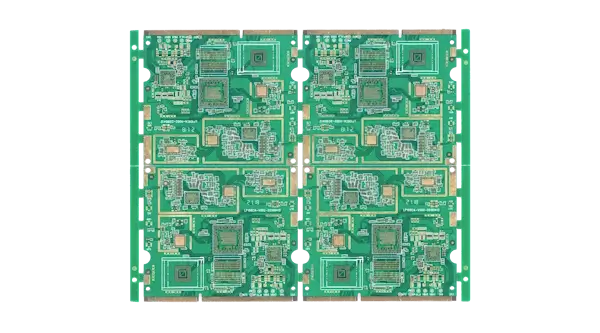
Printed circuit boards made with high glass transition temperature (Tg) materials, typically 170°C and above.
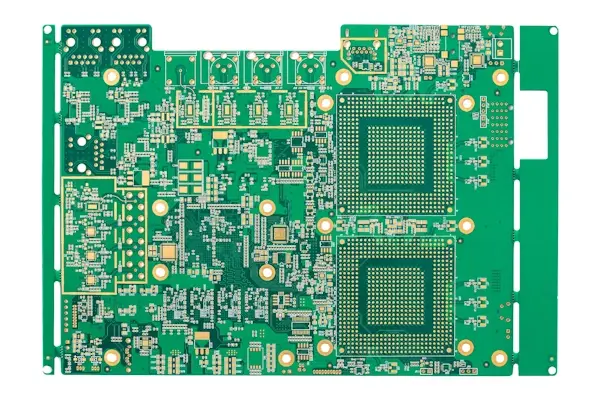
PCBs designed to handle signals in the GHz range with minimal signal loss and distortion.
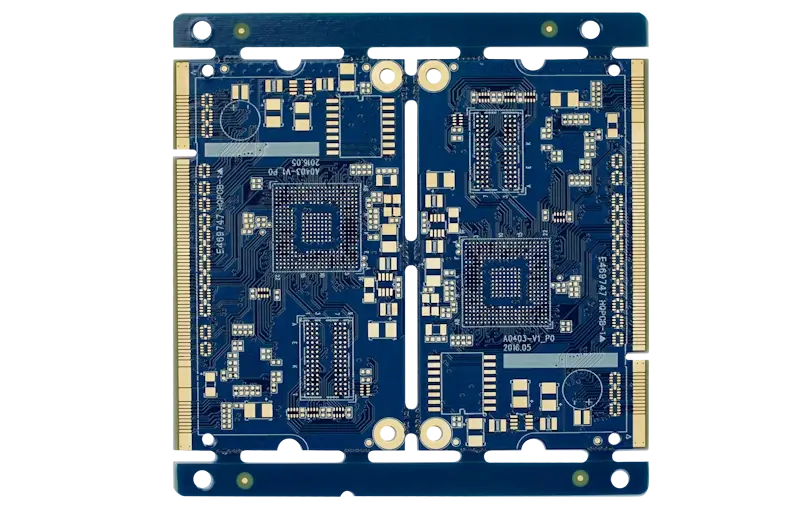
Circuit boards optimized for high-speed digital signals with careful attention to signal integrity.
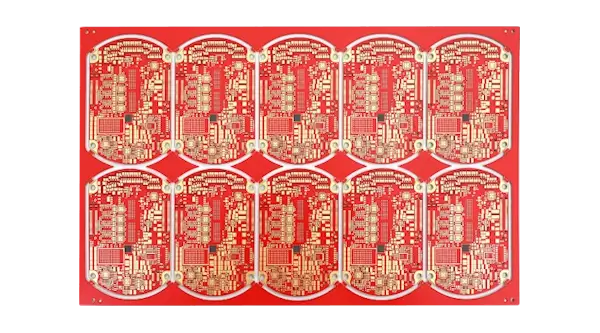
High Density Interconnect PCBs with finer lines, smaller vias, and higher connection density.
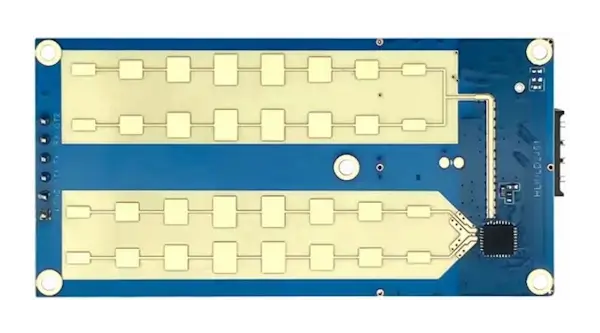
PCBs manufactured using Rogers Corporation's high-performance laminate materials.
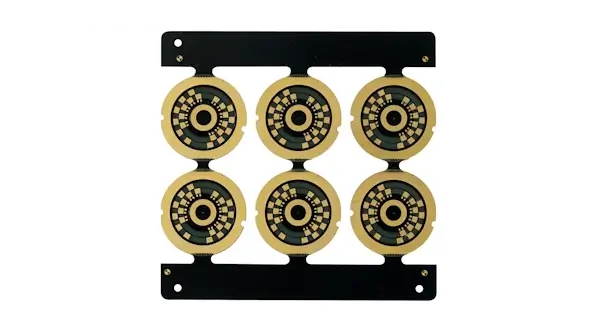
PCBs with exceptionally thick copper layers, typically 3 oz or more, for high-current applications.
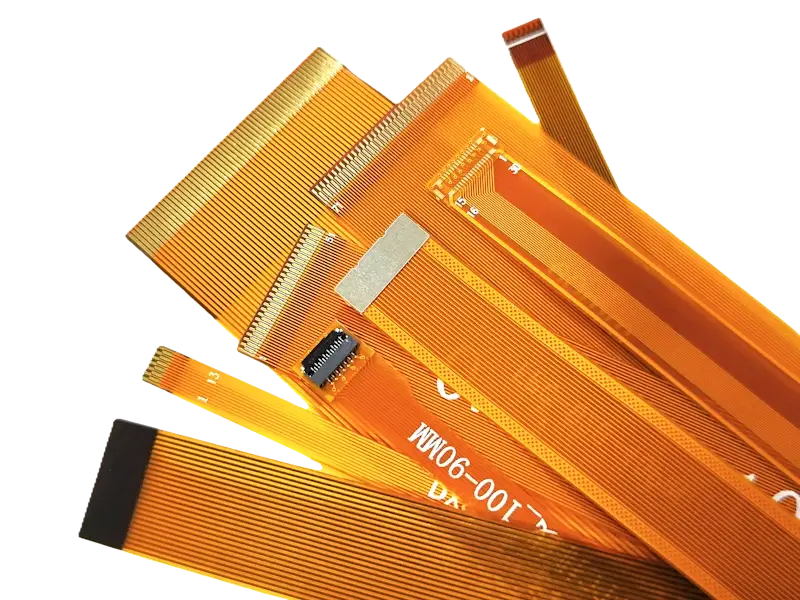
Bendable PCBs made using polyimide or polyester substrates that can conform to dynamic or space-constrained designs.
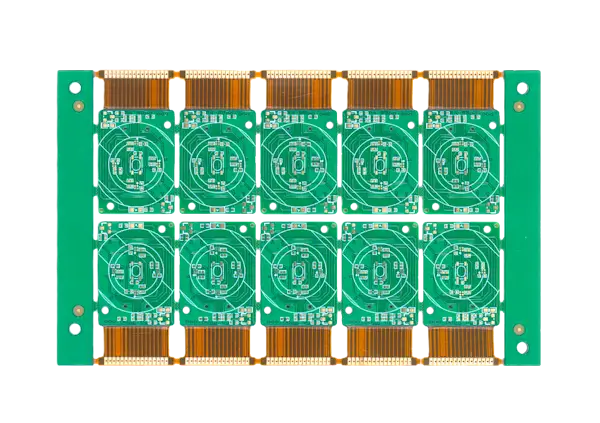
Hybrid circuit boards that combine rigid and flexible substrates into a single integrated assembly.
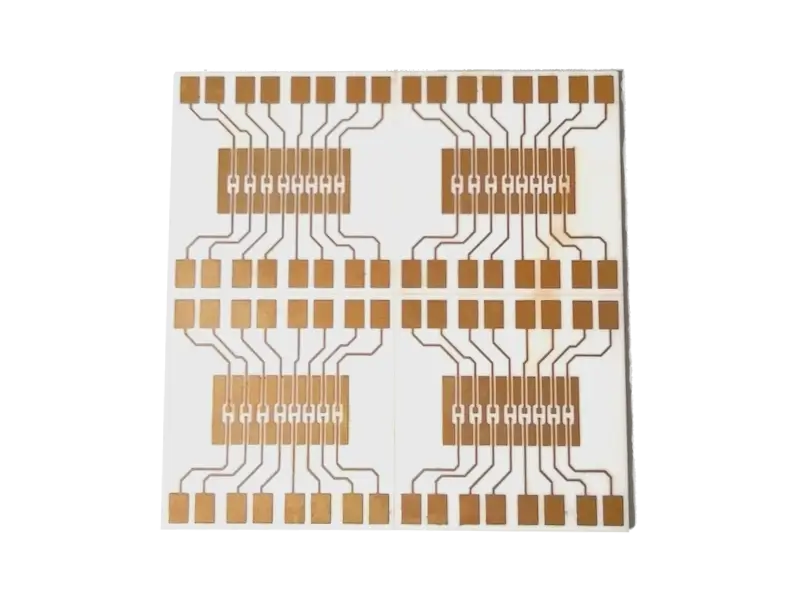
Circuit boards manufactured using ceramic substrates like Al₂O₃ and AlN for extreme thermal and electrical performance.
From cutting-edge technology to medical-grade quality, we eliminate mass production risks.
Industry-leading specs for complex designs
Meeting strict AVL and audit requirements
Original CoC & full batch traceability
No request is too extravagant. Backdrilling? Embedded coins? Hybrid PCBs? Try us and see if we support your special processing needs.
| Feature | Standard PCBs | Advanced PCBs |
|---|---|---|
| Material Selection | Standard Kingboard or Shengyi FR-4 laminates | Rogers, Megatron, ITEQ, Isola and more |
| Layer Count | 1-20 layers | 40+ layers |
| Special Processes | Basic - special processes may cause delays | Advanced tailored options |
| Applications | Consumer electronics, DIY projects, automotive | Medical, automotive, aerospace, high-frequency systems |
| Costs | Low - $5 USD for 5 pieces or even less | High - From less than one hundred to thousands |
| Production Time | Short - from 24 hours | Long - few days to weeks depending on complexity |
Professional engineers available
+86 755 8364 3663
WeChat & Online Chat
+86 13622941920
Expert answers to common engineering and manufacturing queries regarding our advanced PCB fabrication and EMS solutions.
We manufacture HDI PCBs up to 32 layers, from 1-step to 3-step build-ups, including Any-Layer via structures. Our laser drilling supports microvias down to 0.075mm (3mil). We offer blind, buried, and stacked vias compliant with IPC-6012 Class 3 standards, ensuring superior signal integrity and reliability for complex, high-speed designs.
We provide impedance control with a tolerance of ±10% for impedances above 50Ω and ±5Ω for impedances at or below 50Ω. We utilize TDR (Time Domain Reflectometry) testing on all impedance-controlled batches and provide detailed test reports to guarantee signal performance.
Absolutely. As an IATF 16949 and ISO 9001 certified manufacturer, we meet stringent automotive and industrial traceability requirements. We stock a comprehensive range of advanced substrates including Rogers (e.g., RO4350B), Teflon (PTFE), Polyimide (for Flex/Rigid-Flex), and high-Tg FR4 to support high-frequency and high-thermal applications.
Yes, our Turnkey PCBA service covers everything from fabrication to global component sourcing via authorized distributors. Our automated SMT lines support passive components down to 01005 imperial (0402 metric) and ultra-fine pitch BGAs (0.25mm pitch). Every board undergoes rigorous 3D SPI, 3D AOI, and optional X-ray inspection to ensure zero-defect assembly.
We offer seamless scalability. Rapid prototypes can be turned around in as fast as 24 hours. For mass production, our expert DFM (Design for Manufacturing) engineering team proactively reviews your Gerbers/ODB++ to optimize yield and reduce costs. Supported by our robust ERP tracking, standard volume production lead times are highly competitive and reliable.
Beyond standard AOI and electrical testing, HDI boards can be screened with a four-wire (Kelvin) low-resistance test combined with high-current thermal stress (HCT). Via resistance is measured at room temperature, the board is heated under high current to simulate reflow stress, and resistance is measured again after cooling. A significant change flags latent defects such as blind-via separation or inner-layer connection (ICD) failures. Plasma desmear, copper-filled microvias and dedicated blind-via AOI further support microvia reliability. Contact our engineers to confirm availability for your stack-up.


 PCB Assembly