NextPCB Capabilities
Printed Circuit Boards
NextPCB Capabilities
Printed Circuit Boards
 PCB Assembly
 Layer Buildup
 SMD-Stencils
 PCB Design-Aid & Layout
 Mechanics
 Quality
 Drills & Throughplating
 Factory & Certificate
 PCB Assembly Factory Show
Certificate
PCB Assembly Factory Show
Certificate

Support Team
Feedback:
support@nextpcb.com


Printed Circuit Board (PCB) design is the critical process of creating the blueprint for electronic hardware, mapping out how components are interconnected through conductive traces, vias, and layers to ensure reliable connectivity and functionality. It is the foundation upon which the performance, durability, and efficiency of any electronic device are built.
A well-executed PCB design directly influences key factors such as signal integrity, electromagnetic compatibility, thermal management, and manufacturability. High-quality designs not only enhance product performance but also shorten development cycles by helping teams meet demanding time-to-market goals without sacrificing reliability. Poor design choices can lead to costly redesigns, production delays, and even product failure in the field.
This is where strategic collaboration with experienced PCB prototyping and manufacturing partners becomes invaluable. Companies like NextPCB provide the advanced fabrication capabilities, design-for-manufacturing (DFM) support, and rapid prototyping services that allow designers to move seamlessly from concept to physical boards with speed and precision.
For engineers, technical students, and organizations aiming to innovate competitively, mastering PCB design fundamentals is non-negotiable. A strong understanding of layout principles, component placement, signal routing, and manufacturability lays the groundwork for creating electronic systems that are both high-performing and production-ready.
PCB design is a multi-disciplinary process that blends electronics engineering, materials science, and manufacturing knowledge. Understanding the foundational elements ensures that a design is not only functional in theory but also manufacturable and reliable in practice.
The PCB layer stack-up refers to the engineered arrangement of conductive copper planes and insulating dielectric substrates that together define the board’s electrical and mechanical architecture. An optimized stack-up minimizes signal propagation delay, maintains controlled impedance, mitigates electromagnetic interference (EMI) through effective plane referencing, and improves power integrity via low-inductance current return paths.
Standard configurations range from single- and double-sided PCBs to complex multilayer architectures, with advanced implementations leveraging High-Density Interconnect (HDI) technologies such as microvias, blind/buried vias, and sequential lamination. Material selection is critical; FR-4 epoxy-glass laminates remain standard for general-purpose applications, while low-loss, low-Dk materials like Rogers, Taconic, or Isola laminates are preferred for RF/microwave designs requiring minimal insertion loss and superior signal fidelity.
Engineering Tip: Early engagement with your fabrication partner ensures that your stack-up is optimized for both manufacturability and electrical performance within the constraints of available laminate thicknesses, copper weights, dielectric constants, and cost parameters. PCB Manufacturers like NextPCB provide predefined stack-up templates, material datasheets, and impedance modeling support to streamline this phase of the design process.
> Recommend reading: Choosing High-Speed PCB Stackups from 4 to 10 Layers
The schematic functions as the primary logical representation of the circuit, defining all net interconnections, component symbols, electrical constraints, and pin-to-pad mappings. It serves as the authoritative netlist source from which the PCB layout is generated. Maintaining netlist integrity through electrical rule checks (ERC) and design rule checks (DRC) is essential to prevent discontinuities such as open nets, unintended shorts, or incorrect signal assignments.
Efficient design workflows employ hierarchical schematic architectures to modularize complex systems, enabling reusability of subcircuits and simplifying change management. Forward and back annotation between the schematic and PCB layout ensures continuous synchronization of reference designators, footprints, and connectivity, minimizing the risk of mismatches during design iteration.
In the PCB layout phase, the verified netlist is translated into precise physical placement and routing, incorporating constraints for trace width, clearance, impedance control, and high-speed signal integrity. This step often integrates constraint-driven design tools, which automatically enforce electrical and mechanical requirements during routing.
Engineering Tip: Consistent schematic-to-layout data integrity not only accelerates the design cycle but also reduces costly rework. Leveraging CAD platforms with robust netlist verification and constraint management, combined with early DFM (Design for Manufacturability) consultation, ensures the transition from logical to physical design is both error-free and fabrication-ready.
Component placement establishes the electrical, mechanical, and thermal foundation of a PCB, directly influencing routing topology, electromagnetic compatibility (EMC), and overall manufacturability. Strategic placement reduces signal path lengths, minimizes parasitics, and improves power integrity by optimizing return current flow.
For high-speed differential interfaces (e.g., USB 3.0, PCIe, HDMI), component positioning must support tight length matching to control skew, while maintaining parallelism and uniform spacing to reduce differential-to-common mode conversion and crosstalk. Critical bypass and decoupling capacitors should be placed within 1–3 mm of the associated IC power pins, on the same layer when possible, to minimize loop inductance and lower Power Distribution Network (PDN) impedance.
Thermal and noise-sensitive analog circuits should be physically isolated from high-current switching regulators, power MOSFETs, and clock generators to mitigate conducted and radiated noise coupling. Placement should also account for heat dissipation pathways, ensuring adequate copper pour and thermal via structures beneath heat-generating components.
Engineering Tip: Apply placement priority zones early in the design, grouping high-speed, power, and sensitive analog domains, before routing begins. This top-down approach, combined with simulation-driven placement verification, improves EMC compliance, reduces rework, and accelerates design closure.

PCB routing defines the physical interconnect architecture, balancing electrical performance, manufacturability, and mechanical constraints. Optimal routing minimizes signal path length to reduce propagation delay and attenuation while adhering to controlled impedance requirements for high-speed and RF designs.
Trace width and spacing are determined using IPC-2152 guidelines for current-carrying capacity, incorporating variables such as copper weight (e.g., 1 oz/ft² ≈ 35 µm thickness), permissible temperature rise, and routing layer location (internal vs. external). For high-speed differential pairs, maintain differential impedance within ±10% of the target value, using consistent trace geometry, reference plane continuity, and symmetric coupling to control signal integrity.
Best practices include eliminating unterminated stubs to prevent signal reflections, employing via stitching or via fences along high-frequency return paths to improve ground integrity, and ensuring uninterrupted reference planes beneath critical traces to avoid impedance discontinuities. In dense layouts, layer transitions for high-speed nets should be minimized, and where unavoidable, backdrilling or stub removal techniques can further enhance signal quality.
Engineering Tip: Treat routing as an electromagnetic design problem rather than purely geometric placement. Early integration of field-solver–based impedance calculations, signal integrity simulations, and design-for-manufacturability (DFM) checks ensures the routed board meets both electrical specifications and fabrication tolerances without late-stage redesigns.
Well-engineered power and ground planes are fundamental to signal integrity, power integrity, and electromagnetic compatibility. Dedicated, continuous planes provide low-impedance current return paths, minimizing ground bounce and voltage fluctuations across the Power Distribution Network (PDN). A solid ground plane also acts as an effective reference for controlled impedance routing and serves as a distributed shield against EMI.
In designs with split or segmented planes, often required for mixed-signal or multi-voltage systems, careful return path analysis is essential. Signal traces crossing a plane split can force return currents into long detours, increasing loop inductance and radiated emissions. To mitigate this, controlled stitching points or ferrite bead connections between plane regions should be employed to maintain predictable current return paths while preventing noise coupling between domains.
For multi-voltage power delivery, discrete copper pours should be electrically isolated and tied together only at designated star points or controlled impedance interconnects to reduce cross-contamination of switching noise. Thermal relief pads on through-hole components balance solderability with heat dissipation, ensuring reliable assembly without creating excessive thermal resistance.
Engineering Tip: Integrate PDN impedance profiling and plane resonance analysis early in the design cycle to validate layer stack-up, decoupling placement, and plane geometry. Aligning these practices with the fabricator’s Design for Manufacturability (DFM) guidelines and utilizing tools such as NextPCB’s impedance calculators, automated DRC checks, and advanced lamination capabilities, ensures that even high-layer-count, high-speed boards progress from CAD to production with minimal design spins.
Once the fundamentals are in place, advanced PCB design focuses on optimizing electrical performance, thermal behavior, manufacturability, and compliance with industry standards. These considerations are critical for high-speed, high-density, and mission-critical applications.
At gigahertz frequencies, PCB traces behave as controlled transmission lines rather than simple conductors. Designing controlled impedance traces (typically 50 Ω single-ended or 90–100 Ω differential) ensures minimal signal reflection and distortion. Differential pairs such as USB 3.1, PCIe, or HDMI must be routed with matched lengths to maintain skew within a few picoseconds, preserving data integrity. Crosstalk reduction is achieved by maintaining adequate spacing (usually 3–5 times the trace width) and using ground reference planes to provide return path continuity. Signal integrity simulations can validate these constraints before fabrication.
NextPCB advantage: Our impedance-controlled fabrication and high-precision etching processes ensure trace geometries remain within tight tolerances, essential for high-speed PCB performance.
Heat buildup can degrade component lifespan and alter electrical characteristics. Effective thermal management involves a combination of thermal vias, heat spreaders, and copper pours to conduct heat away from hot spots. FR-4 has limited thermal conductivity (~0.3 W/m·K), so high-power boards may require metal core PCBs or high-Tg laminates. Component placement should also facilitate airflow in forced convection environments.
NextPCB advantage: Our multi-layer capabilities, metal core PCB production, and advanced material options enable designs with superior heat dissipation for high-power or LED applications.
Following DFM guidelines reduces fabrication risks and avoids costly redesigns. This includes adhering to minimum trace/space widths via aspect ratios, solder mask clearances, and component-to-edge distances. Early collaboration with the PCB manufacturer ensures the design aligns with their production capabilities and yield optimization strategies.
NextPCB advantage: Our online DFM tools flag potential manufacturing issues instantly, helping designers make corrections before committing to production.
Electromagnetic interference (EMI) and compatibility (EMC) compliance are mandatory for most commercial electronics. Strategies include stitching along board edges, guard traces, filtering with ferrite beads, and strategic ground plane segmentation to control high-frequency noise paths. High-speed clock lines should be routed away from antenna structures, and shielding cans may be required in extreme cases.
NextPCB advantage: Our precision fabrication ensures consistent copper thickness, clean etching, and tight tolerances, which contribute to predictable EMI performance during compliance testing.
AI-driven PCB design software can now auto-route differential pairs, predict signal integrity issues, and optimize component placement based on thermal or EMI constraints. These tools integrate simulation feedback into layout decisions, reducing human error and shortening design cycles.
NextPCB advantage: By integrating with modern CAD workflows and offering fast-turn fabrication, NextPCB enables engineers to rapidly validate AI-optimized designs through physical prototyping and iterative refinement.
Even experienced designers can fall prey to critical errors that compromise PCB functionality and manufacturability. Recognizing these common pitfalls early and addressing them proactively is vital to ensuring a successful design-to-production workflow.
Improper grounding is one of the most frequent causes of noise, signal distortion, and EMI issues. Common mistakes include floating grounds, ground loops, and inadequate ground plane segmentation. Such errors can cause unpredictable return current paths and increase susceptibility to interference, especially in mixed-signal or high-speed designs. Ensuring a solid, low-impedance ground reference and employing techniques like star grounding or single-point grounds where applicable can mitigate these risks.
Using trace widths that do not meet current-carrying requirements leads to excessive resistive heating and potential trace failure. Underestimating minimum trace spacing can cause short circuits during manufacturing or create signal coupling that degrades integrity. Designers should calculate trace widths according to IPC-2152 standards and verify spacing per the manufacturer's capabilities.
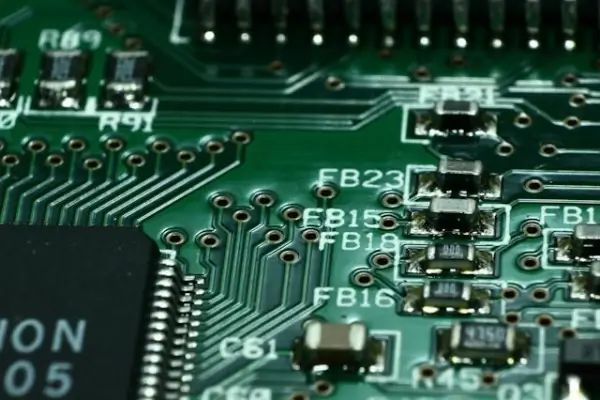
Neglecting thermal management causes hotspots that can damage components or degrade signal performance. Failure to incorporate thermal vias, adequate copper pours, or proper component spacing for heat dissipation results in reliability issues and product failures in the field.
Skipping or rushing DRC leads to overlooked violations of fabrication tolerances, such as via sizes, annular rings, solder mask clearances, and drill hits. This results in costly rework or scrap during PCB manufacturing.
NextPCB’s online platform integrates real-time Design Rule Checking (DRC) that flags errors related to trace widths, spacing, vias, and more before you finalize your production design. Their prototyping services offer quick turnaround times, enabling early physical validation of your board layout and functionality. This proactive approach significantly reduces the risk of downstream failures and accelerates product development cycles.
Exceptional PCB design demands not only deep technical expertise but also a trusted manufacturing partner who fully understands the intricate challenges designers face, from tight tolerances and complex layouts to fast turnaround requirements.
NextPCB combines state-of-the-art fabrication technologies, comprehensive design support services, and rapid prototyping capabilities to help engineers, technical students, and organizations transform complex designs into high-quality, production-ready PCBs with reliability and efficiency.
Their intuitive online platform streamlines the entire process, simplifying order placement, enabling instant design rule checks, and providing transparent production tracking. This reduces lead times, mitigates errors, and enhances overall project visibility.
For anyone committed to excellence in PCB design and looking to accelerate product development cycles without compromising quality, partnering with NextPCB offers a strategic advantage. Their blend of advanced manufacturing, customer-centric service, and innovation support ensures your electronic designs come to life with precision, speed, and cost-effectiveness.
Explore NextPCB’s offerings today to elevate your PCB design and manufacturing journey, because your innovative electronics deserve nothing less.
Get PCB Quote Online Try NextPCB Free Online Gerber Viewer
About the Author
Abiola Ayodele: Broadcast Journalist & Tech Writer; Cooperate writer of NextPCB.
Specialize in technical writing, and editing, particularly in the areas of PCB design, semiconductors, cybersecurity, and emerging engineering technologies.
Still, need help? Contact Us: support@nextpcb.com
Need a PCB or PCBA quote? Quote now