NextPCB Capabilities
 PCB Assembly
 Process Capabilities

 Quality
 Drills & Throughplating
 Factory & Certificate



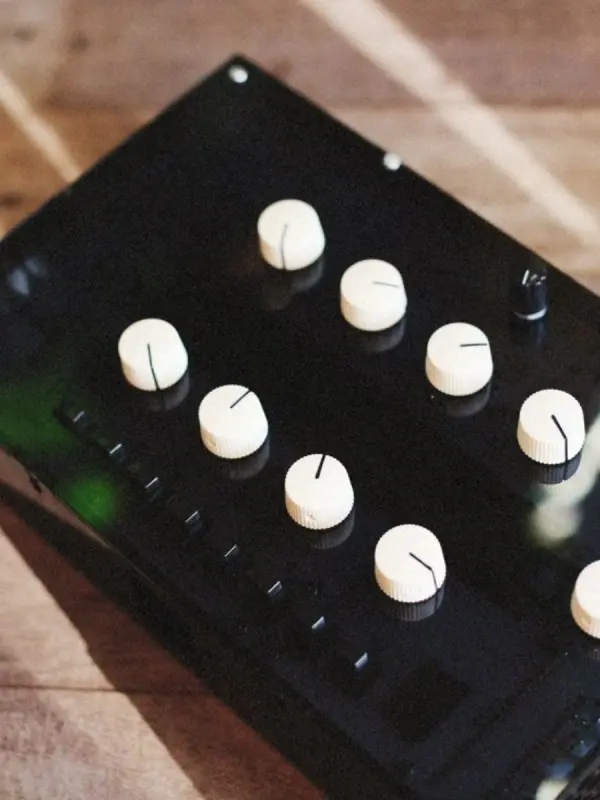
The enclosure protects your PCB, shapes how the product feels and decides whether it passes safety and environmental requirements. Most electronics enclosures are injection molded from a small group of plastics, and the right choice depends on heat, impact, flame rating, wireless performance and where the product will be used. This guide compares ABS, ASA, PC, PC/ABS, PP, PE, nylon, POM, TPU and PVC from the point of view of the board inside.
What the Enclosure Has to Do for Your PCB
Start from the requirements of the board, not from the material list. Ask these questions first:
- How hot does it get? Voltage regulators, power stages and batteries warm the inside of the housing.
- Is a flame rating required? Mains-powered products and chargers often need a UL 94 V-0 rated plastic.
- Does it have an antenna? Wi-Fi, Bluetooth and cellular modules work through plastic, but metal and some conductive fillers block signals.
- Is it ESD sensitive? Some environments need a static dissipative housing.
- Where will it be used? Sunlight, moisture and chemicals change the best choice.
- What must the plastic hold? Screw bosses, snap fits, inserts and light pipes all place demands on the material.
Enclosure Plastic Comparison
| Material | Impact strength | Heat resistance | Best for | Watch out for |
|---|---|---|---|---|
| ABS | Good | Medium | Indoor housings, consumer devices | Weak UV resistance, flammable unless flame retardant |
| ASA | Good | Medium | Outdoor enclosures, sensors | Slightly higher cost than ABS |
| PC | Very high | High | Rugged or transparent parts, light pipes | Scratches easily, sensitive to some chemicals |
| PC/ABS | High | Medium to high | Handheld devices, chargers, laptops | Costs more than ABS |
| PP | Good | Medium | Low-cost housings, living hinges | Warps more, hard to paint or print |
| PE | Good, soft | Low | Caps, covers, flexible parts | Low stiffness, not for rigid housings |
| Nylon (PA) | High | Medium to high | Clips, brackets, wear parts | Absorbs moisture and can change size |
| POM | Good, stiff | Medium | Gears, latches, sliding parts | Hard to bond or paint |
| TPU | Flexible | Low to medium | Seals, grips, cable strain relief | Too soft for structural walls |
| PVC | Medium | Low to medium | Flame-resistant covers, specialty parts | Corrosive during molding, needs stainless mold steel |
The ratings are general comparisons. Exact properties vary by grade and supplier, so check the datasheet of the grade you select.
ABS, ASA, PC and PC/ABS
ABS
ABS is the most common enclosure plastic. It molds easily, takes paint, texture and silk-screen printing well, and keeps costs low. It suits indoor products such as desktop devices, controllers and instrument housings. Its weaknesses are poor UV resistance, which causes yellowing outdoors, and moderate heat resistance.
ASA
ASA behaves like ABS but resists sunlight and weathering. Use it for outdoor sensors, junction boxes and anything exposed to the sun for years. It is a better outdoor choice than ABS with a UV stabilizer when color stability matters.
PC (polycarbonate)
PC offers very high impact strength and better heat resistance than ABS. It is available transparent, which makes it a common choice for light pipes, windows and clear covers over LEDs and displays. It scratches more easily and can crack under stress when exposed to some chemicals, so avoid sharp internal corners and high-stress bosses.
PC/ABS
PC/ABS blends the two. It gains much of PC's toughness and heat resistance while staying easier to mold, which helps with thin walls and complex shapes. It is a common choice for handheld devices, chargers and housings that need both strength and a clean surface. Flame-retardant PC/ABS grades are widely available.
PP, PE, Nylon, POM, TPU and PVC
These plastics are usually chosen for a specific function rather than for the whole housing:
- PP: low cost and good chemical resistance. It forms living hinges well, but it warps more and is harder to paint or print.
- PE: soft and chemical resistant. It suits plugs, caps and flexible covers, not rigid walls.
- Nylon (PA): tough and wear resistant, useful for clips, brackets and connectors. It absorbs moisture, so dimensions can shift after molding.
- POM: stiff with low friction. It is a good fit for gears, latches and sliding parts.
- TPU: flexible and rubber-like. It suits seals, grips and cable strain relief.
- PVC: flame resistant but corrosive during molding. It needs corrosion-resistant mold steel such as S136 (see our injection mold steel guide), so it is chosen only when its properties are required.
Flame Retardant, ESD and UV Additives
Additives change a base plastic to meet a specific requirement:
- Flame retardant: used when the product needs a UL 94 flame rating, such as V-0, common for chargers and mains-powered devices. Check the rating for your exact grade and wall thickness.
- Static dissipative: reduces static buildup in housings around ESD-sensitive electronics.
- UV stabilizer: slows yellowing and brittleness in sunlight. For long outdoor life, ASA is usually the better base material.
Additives can change color, surface finish and cost, so decide on them early.
How to Choose by Application
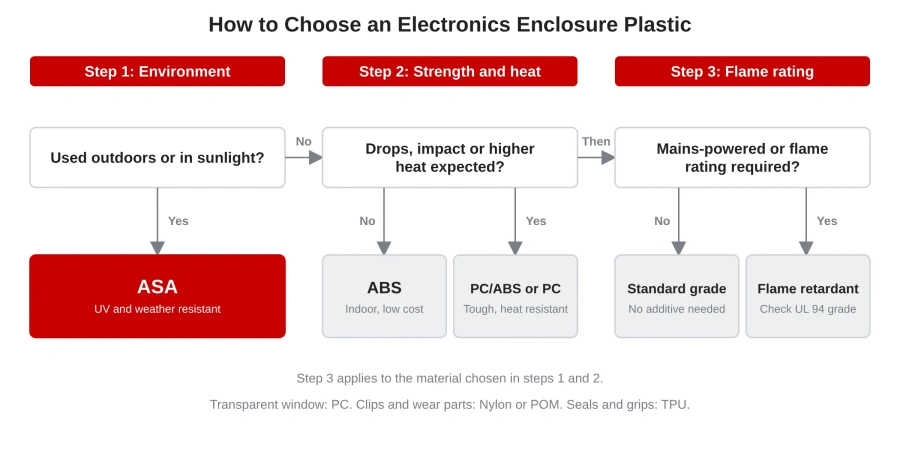
| Your product | Suggested material |
|---|---|
| Indoor desktop device, controller or instrument | ABS |
| Handheld device that may be dropped | PC/ABS or PC |
| Charger, power adapter or mains-powered device | Flame-retardant PC/ABS or PC |
| Outdoor sensor, gateway or junction box | ASA, or PC with UV stabilizer |
| LED window, light pipe or clear cover | PC (transparent) |
| Product with wireless antenna | ABS, PC/ABS or PC, without conductive additives |
| Snap hooks, clips and wear parts | Nylon or POM |
| Seals, grips and strain relief | TPU |
| Low-cost cover or housing with chemical exposure | PP |
Chosen Your Material? Get Your Quote.
Select material, color and additives in the form. Reply within 1 working day.
Get an Injection Molding Quote
Designing the PCB inside this enclosure? Get a PCB assembly quote from the same supplier.
Design Notes That Affect Material Choice
- Screw bosses and inserts: if the housing uses screw bosses or threaded inserts, choose a material that holds threads well and keep the boss wall thick enough to avoid cracking.
- Snap fits: ABS and PC/ABS are suitable for snap fits, but brittle grades can break after repeated use. Nylon and POM handle repeated flexing better.
- Wall thickness: keep walls uniform to reduce warpage and sink marks, especially in PP and nylon.
- Ventilation and heat: if parts of the board run hot, place vents carefully or move heat away from the plastic. Select a material with enough heat resistance for the hottest nearby component.
- Surface finish: the plastic and the SPI finish work together. Glossy and transparent parts need a fine polish, while textured finishes hide marks on ABS and PC/ABS.
- Color: transparent and light colors show flow lines and flaws more than dark ones.
- Shrinkage and fit: each plastic shrinks by a different amount, which affects how parts fit together. See our guide to injection molding tolerances for typical shrinkage by material.
How to Specify Material in Your Quote
The NextPCB injection molding quote lets you describe the enclosure in one form. After uploading your 3D model, you can set:
- Material: ABS, ASA, Nylon, PC, PC+ABS, PE, POM, TPU, PP or PVC, or a custom material.
- Color: Black, White, Grey, Transparent, Blue, Red, Yellow, Green or a custom color.
- Material additives: None, Flame Retardant, Static Dissipative or UV Stabilizer.
- SPI finish, threads, inserts and part marking: to match the look and assembly of your enclosure.
A sales representative reviews your request and replies within 1 working day. If your product also needs a circuit board, you can get a PCB assembly quote from the same supplier.
FAQ
What is the best plastic for an electronics enclosure?
For most indoor products, ABS is the best starting point because it is easy to mold, finishes well and costs less. Choose PC/ABS or PC when you need more impact and heat resistance, and ASA for outdoor use.
ABS or polycarbonate for an electronics enclosure?
ABS costs less and molds more easily, so it suits indoor products. Polycarbonate is tougher, handles more heat and can be transparent, but it costs more and scratches more easily. PC/ABS sits between them.
What plastic is best for outdoor electronic enclosures?
ASA is usually the best choice because it resists UV light and weathering without yellowing. PC with a UV stabilizer is another option when you need higher impact strength.
Which plastic is flame retardant for electronics housings?
Many ABS, PC and PC/ABS grades are available with flame retardant additives, often rated UL 94 V-0. The rating depends on the grade and wall thickness, so confirm it on the material datasheet.
Does a plastic enclosure block Wi-Fi or Bluetooth signals?
Standard ABS, PC and PC/ABS let radio signals pass, which is why plastic is common for wireless products. Metal parts, metallic paint and conductive fillers can reduce signal strength, so check them if your device has an antenna.
Can I use transparent plastic for an LED light pipe or window?
Yes. Transparent PC is the usual choice. Clear parts need a high-polish SPI finish and a well-polished mold to stay clear.
What is the difference between ABS and ASA?
Both have a similar look and strength, but ASA resists UV light and weathering far better. ABS can yellow and become brittle in sunlight, so ASA is used for outdoor products.
Which materials can I choose in the NextPCB injection molding quote?
You can choose ABS, ASA, Nylon, PC, PC+ABS, PE, POM, TPU, PP or PVC, or enter a custom material. Additives include Flame Retardant, Static Dissipative and UV Stabilizer.
Get an Injection Molding Quote
Upload your 3D model, choose your material, color and SPI finish, and send your request. A sales representative reviews it and replies within 1 working day.