

 NextPCB Capabilities
 PCB Assembly
 Layer Buildup
 SMD-Stencils
 PCB Design-Aid & Layout
 Mechanics
 Quality
 Drills & Throughplating
 Factory & Certificate



Introduction
Choosing a lead-free solder material is no longer just a regulatory checkbox — it's a decision that directly affects your board's reliability, your assembly line's thermal profile, and your total manufacturing cost. Since the RoHS directive phased lead out of most consumer and industrial electronics, "lead-free" has become the default, but which lead-free alloy to specify is where most engineers get stuck.
This guide focuses specifically on solder material selection — comparing the most common lead-free alloys by composition, melting point, reliability, and cost — so you can choose the right material for your application rather than defaulting to whatever your assembly house has on hand.
(If you're looking for reflow temperature profiles, RoHS regulatory details, or HASL surface finish comparisons, we link out to our dedicated guides on those topics throughout this article — this guide focuses on material selection itself.)

Table of Content
- What Is Lead-Free Solder Material?
- Common Lead-Free Solder Alloys Compared
- Lead-Free vs. Leaded Solder: What Actually Changes
- How Lead-Free Material Choice Affects Your Soldering Process
- Choosing the Right Lead-Free Solder for Your Application
- FAQ
What Is Lead-Free Solder Material?
Lead-free solder is a solder alloy that eliminates lead (Pb) from its composition, typically replacing it with combinations of tin (Sn), silver (Ag), copper (Cu), bismuth (Bi), or nickel (Ni). It's used in both solder paste (for reflow/SMT assembly) and solder wire (for hand and wave soldering), and is manufactured to standards such as IPC J-STD-006 (solder alloy classification) and the EU's RoHS Directive 2011/65/EU, which restricts lead in most consumer and commercial electronics.
The shift to lead-free wasn't just regulatory — lead-free alloys also offer better tensile strength and improved resistance to thermal fatigue in many applications, though they come with trade-offs in melting point and wetting behavior, covered below.
Common Lead-Free Solder Alloys Compared
Not all lead-free solder is the same. The alloy you choose affects melting point, joint reliability, cost, and compatibility with your assembly process. Here's how the most widely used lead-free alloys compare.
|
Alloy |
Composition |
Melting Point |
Relative Cost |
Typical Use Case |
|
SAC305 |
96.5% Sn, 3% Ag, 0.5% Cu |
~217–220°C |
Moderate |
Industry-standard choice for general SMT reflow; best balance of reliability and cost |
|
SAC387 |
95.5% Sn, 3.8% Ag, 0.7% Cu |
~217°C |
Moderate-High |
Slightly better wetting than SAC305; used where solder joint appearance/consistency matters |
|
SN100C |
99.3% Sn, 0.7% Cu, trace Ni/Ge |
~227°C |
Lower |
Lower silver content reduces cost; popular for wave soldering and cost-sensitive high-volume production |
|
SnCu (Tin-Copper) |
~99.3% Sn, 0.7% Cu |
~227°C |
Lowest |
Budget-friendly wave soldering; less common in fine-pitch SMT due to wetting limitations |
|
SnBi (Tin-Bismuth) |
~42% Sn, 58% Bi (varies) |
~138–170°C |
Moderate |
Low-temperature reflow for heat-sensitive components or mixed assembly processes |
Key takeaway: For most standard PCB assembly work, SAC305 remains the default recommendation — it's the most widely validated, has broad equipment/process compatibility, and is what most contract manufacturers stock as standard. Deviating to SN100C (lower cost) or SnBi (lower temperature) should be a deliberate choice based on your specific cost or thermal constraints, not a default.
Lead-Free vs. Leaded Solder: What Actually Changes
|
Factor |
Leaded (Sn63/Pb37) |
Lead-Free (e.g. SAC305) |
|
Melting point |
~183°C |
~217–227°C |
|
Wetting behavior |
Excellent, forms smooth shiny joints |
Slightly poorer; joints often appear duller/grainier (this is normal, not a defect) |
|
Thermal stress on components |
Lower |
Higher — requires components rated for higher reflow temps |
|
Regulatory status |
Restricted under RoHS for most commercial electronics |
RoHS-compliant, industry standard |
|
Long-term reliability |
Well-understood, decades of field data |
Generally comparable or better tensile strength; whisker growth requires mitigation in some alloys |
For a full breakdown of solder types, wire vs. paste, and defect troubleshooting, see our Circuit Board Solder: Types, Temperatures & How to Choose guide.
How Lead-Free Material Choice Affects Your Soldering Process
Switching to a lead-free alloy isn't just a bill-of-materials change — it changes your entire thermal process:
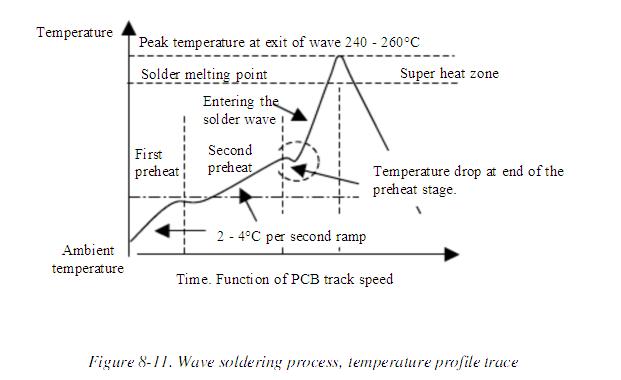
- Reflow soldering: Lead-free alloys typically require peak reflow temperatures of 245–260°C, compared to 210–240°C for leaded solder.
- Hand soldering: Iron tip temperatures generally need to run 20–40°C hotter than for leaded solder to achieve proper wetting.
- Component and substrate selection: Higher reflow temperatures place more thermal stress on components and the PCB substrate itself — this is one reason material selection (e.g., High-Tg laminates) becomes more important in lead-free assembly.
For the full preheat/soak/reflow temperature breakdown by soldering method, see What is the Temperature for Soldering PCB.
Choosing the Right Lead-Free Solder for Your Application
There's no single "best" lead-free solder — the right choice depends on your product's requirements:
- General consumer/commercial electronics: SAC305 is the safe, well-validated default.
- High-volume, cost-sensitive production (especially wave soldering): SN100C or SnCu can meaningfully reduce material cost without sacrificing reliability for less demanding applications.
- Heat-sensitive assemblies (e.g., boards with pre-mounted heat-sensitive components, or step-soldering processes): SnBi low-temperature alloys reduce thermal stress, but require careful process control to avoid brittle joints when mixed with SAC alloys.
- Automotive, aerospace, or other high-reliability applications: Consult your manufacturer about alloys validated against relevant reliability standards (e.g., AEC-Q100 environments) — this is a case where it's worth a direct conversation with your fabricator's engineering team rather than defaulting to a spec sheet.
If your design also involves surface finish decisions (e.g., HASL vs. ENIG), see our comparison in HASL vs Lead-free HASL: PCB Surface Finishes — surface finish and solder alloy selection are related but separate decisions.
Not sure which alloy fits your design and reflow profile?
Get a free DFM review and manufacturing feedback before you commit to a material choice:
FAQ
Is lead-free solder as reliable as leaded solder?
For most standard applications, yes — SAC305 and similar alloys have over two decades of field validation and generally show comparable or better mechanical strength than leaded solder. Some lead-free alloys are more prone to tin whisker growth, which is mitigated through proper alloy selection and, where required, conformal coating.
Does lead-free solder cost more than leaded solder?
Typically yes, due to higher silver content in common alloys like SAC305. Lower-silver alternatives like SN100C narrow this cost gap for high-volume production.
Can I mix leaded and lead-free solder on the same board?
It's generally not recommended without careful process control. Mixing alloys can create joints with unpredictable melting behavior and reliability. If your design requires both (e.g., BGA rework on a lead-free board), this should be planned explicitly with your assembly partner.
What's the melting point of SAC305 solder?
Approximately 217–220°C, compared to 183°C for traditional Sn63/Pb37 leaded solder.