

Zhang

 NextPCB Capabilities
Printed Circuit Boards
NextPCB Capabilities
Printed Circuit Boards
 PCB Assembly
 Layer Buildup
 SMD-Stencils
 PCB Design-Aid & Layout
 Mechanics
 Quality
 Drills & Throughplating
 Factory & Certificate
 PCB Assembly Factory Show
Certificate
PCB Assembly Factory Show
Certificate

Support Team
Feedback:
support@nextpcb.com


For hardware startups, established OEMs, and procurement managers, transitioning a brilliant electronic design into a mass-produced physical product often comes with a severe reality check: the cost of PCB assembly (PCBA).
While bare PCB manufacturing costs have steadily decreased over the years, the assembly phase—sourcing components, programming automated pick-and-place machines, and conducting rigorous quality testing—remains the most capital-intensive part of hardware development. If your design isn't optimized for modern manufacturing floors, you could be hemorrhaging money on hidden fees, excessive setup times, and high defect rates.
This guide won't just tell you what the assembly process is; it will show you exactly how to manipulate your design and procurement strategies to drastically reduce your PCB assembly cost without ever compromising on industrial-grade quality.
Before you can cut costs, you need to know where the money goes. Electronics Manufacturing Services (EMS) typically calculate your quote based on three main pillars:
Design for Manufacturability (DFM) is the secret weapon of veteran hardware engineers. By tweaking your layout in CAD before hitting "export Gerber," you can shave thousands of dollars off your production run.
In 2026, Surface Mount Technology (SMT) is highly automated, blistering fast, and incredibly cheap at scale. Components are placed by robotic nozzles and soldered in massive reflow ovens simultaneously.
Conversely, Through-Hole Technology (THT) often requires manual insertion by human operators and separate wave soldering processes. Every THT component you can replace with an SMT equivalent eliminates manual labor from your quote. If you absolutely must use THT for heavy connectors, group them on one side of the board to simplify the wave soldering process.
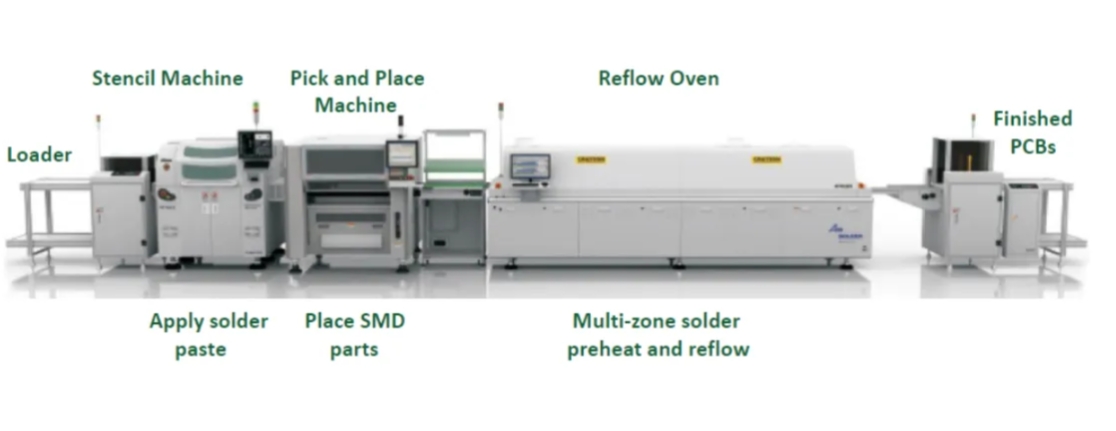
Automated SMT lines drastically reduce labor costs compared to manual THT assembly.
If your design permits, place all your components on only one side of the PCB. Double-sided assembly requires the manufacturer to run the board through the Pick-and-Place machine and the high-temperature reflow oven twice. This doubles the machine time and increases the risk of thermal damage to sensitive ICs on the first side. A slightly larger single-sided board is almost always a lower cost PCB than a highly condensed double-sided board.
Every unique component line item on your BOM requires a separate reel to be loaded onto the feeder of the assembly machine. If your design uses a 10k resistor, a 10.5k resistor, and an 11k resistor, try to redesign the circuit to use three 10k resistors instead.
Furthermore, design around your manufacturer's "House Stock." Top-tier manufacturers like NextPCB hold massive inventories of standard passive components (like 0402 or 0603 standard resistors and capacitors). Using these pre-loaded, bulk-purchased parts is significantly cheaper than forcing the factory to order custom reels for your specific build.
Instead of assembling one tiny 20mm x 20mm board at a time, manufacturers group identical boards into a large array called a panel.
Proper panelization utilizing V-scoring or Tab-routing allows the SMT machines to populate dozens of boards in a single rapid pass. Work with your EMS provider to optimize the panel size to fit their standard machine rails, minimizing wasted FR4 material and maximizing throughput.
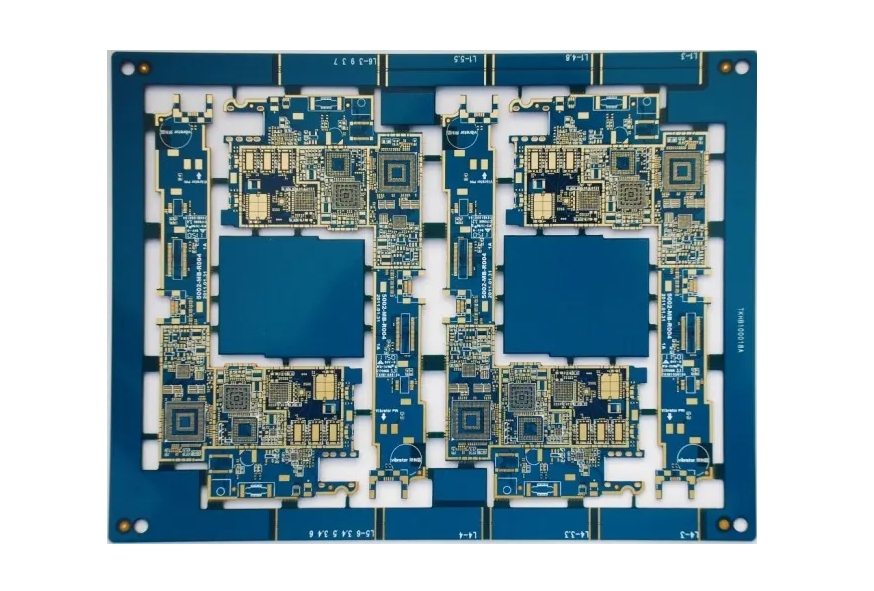
Optimized V-Score Panelization minimizes wasted material and speeds up SMT machine time.
Never send raw, unverified files to a manufacturer. Issues like insufficient spacing between components (causing solder bridges), incorrect footprint mapping, or trapped acid in acute trace angles will halt production, incur engineering holds, and force costly rework.
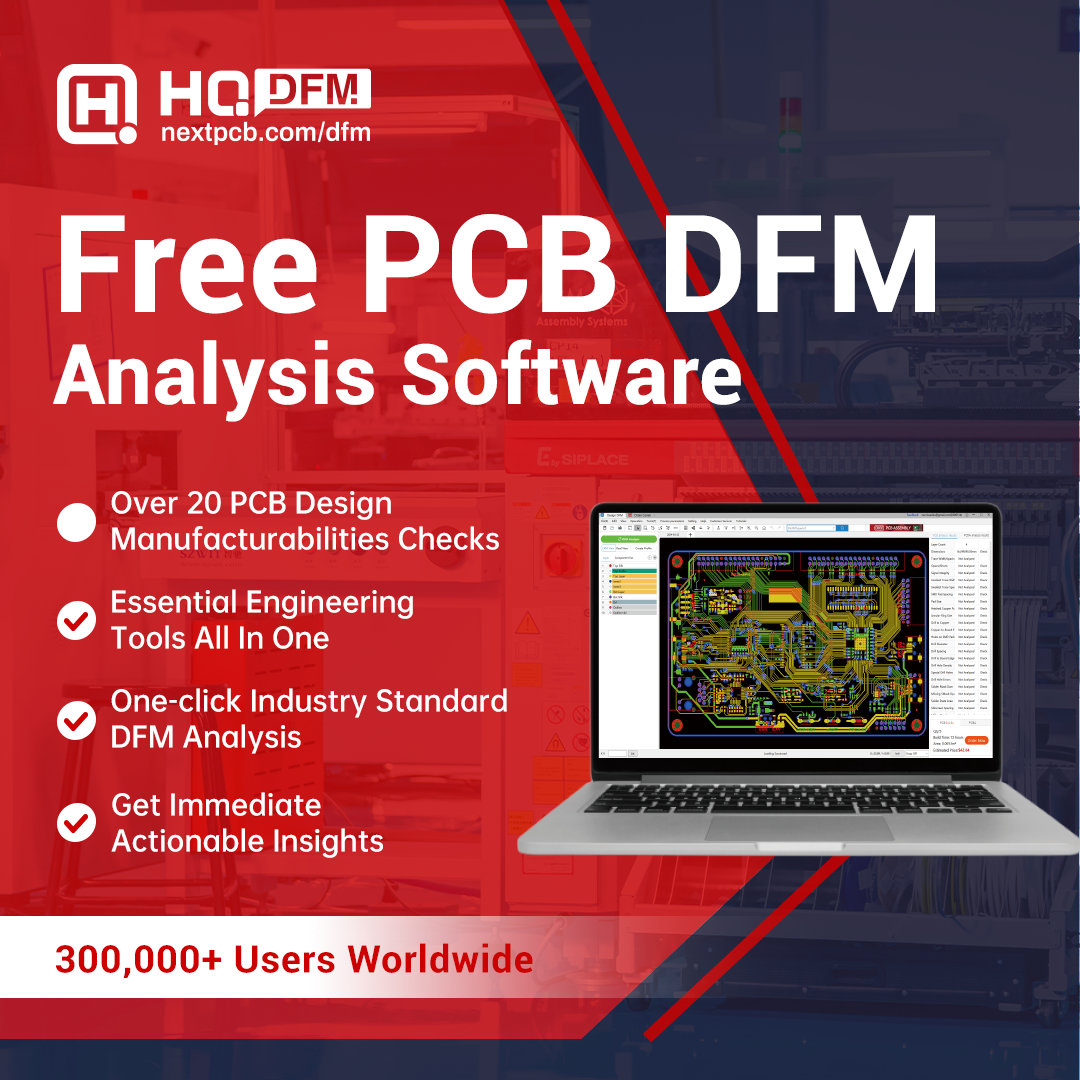
Utilizing advanced DFM analysis tools before production prevents expensive rework and delays.
When sourcing assembly, you typically have two options:
While consigned might seem cheaper on paper because you control the component purchasing, the hidden costs are severe. You pay multiple shipping fees, bear the cost of component shortages (taping and reeling fees), and waste your engineering team's valuable hours on administrative procurement tasks.
Turnkey PCB assembly is heavily favored for a low cost PCB strategy in 2026. Massive factories like NextPCB leverage extreme economies of scale. We buy components at wholesale tier-1 distributor prices that individual companies simply cannot access. Furthermore, consolidating fabrication and assembly under one roof eliminates the "blame game" if a defect occurs—ensuring a seamless, rapid delivery, especially for quick turn PCB needs.
There is a stark difference between a "low-cost PCB" and a "cheaply made PCB." Cutting corners on testing will inevitably result in field failures, brand damage, and expensive product recalls.
When comparing quotes, ensure your assembly partner includes advanced testing in their base price. A reliable process must include:
Investing in a factory that utilizes these technologies—even if their initial quote is slightly higher than a low-tier competitor—will drastically reduce your overall Cost of Poor Quality (COPQ).
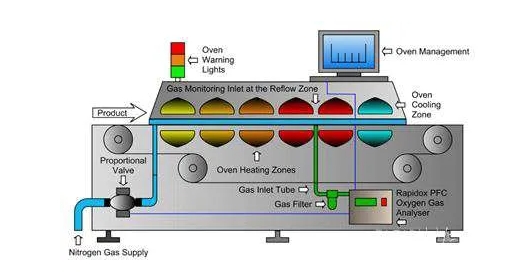
Strict thermal profiling during Reflow Soldering prevents costly component damage and ensures reliable joints.
Your PCBA cost is estimated by calculating the setup fees (NRE), the total cost of the components on your BOM, the number of layers on the bare board, and the total assembly time (driven by the number of SMT vs. THT placements). The fastest way to get an accurate estimate is to upload your Gerber files and BOM to an online Turnkey PCBA calculator.
Yes, significantly. Due to the high initial setup costs (programming machines, creating stencils), the cost-per-unit drops dramatically as your volume increases. Consolidating your prototype runs into a larger, forecastable batch order is the easiest way to secure better pricing.
The biggest cost drivers include: excessive use of Through-Hole components requiring manual labor, designing boards with multiple blind/buried vias or excessive layers (e.g., 8+ layers), sourcing exotic or scarce components, and placing components on both sides of the board.
Generally, no. Supplying your own components (consigned assembly) often leads to hidden costs via shipping delays, overage requirements (factories need extra components for machine attrition), and high administrative overhead. A Full Turnkey service usually provides a lower total cost of ownership due to the manufacturer's bulk purchasing power.
Reducing your PCB assembly costs doesn't mean compromising on the reliability of your electronic products. By applying smart DFM strategies—maximizing SMT usage, standardizing your BOM, utilizing smart panelization, and leveraging the immense supply chain power of a turnkey manufacturer—you can aggressively cut your production budget.
At NextPCB, we specialize in high-quality, cost-optimized electronics manufacturing. We don't just build boards; our engineering team provides complimentary DFM checks and BOM scrubbing to identify potential cost-savings in your design before a single machine is turned on. From rapid quick turn PCB prototyping to full-scale mass production, our fully automated, heavily inspected facilities ensure you get the best value in the industry.
Stop guessing about your manufacturing budget. Upload your Gerber files and BOM to NextPCB today to get an instant, transparent quote, and let our experts help you optimize your next hardware launch.

Still, need help? Contact Us: support@nextpcb.com
Need a PCB or PCBA quote? Quote now