

Arya Li, Project Manager at NextPCB.com

 NextPCB Capabilities
Printed Circuit Boards
NextPCB Capabilities
Printed Circuit Boards
 PCB Assembly
 Layer Buildup
 SMD-Stencils
 PCB Design-Aid & Layout
 Mechanics
 Quality
 Drills & Throughplating
 Factory & Certificate
 PCB Assembly Factory Show
Certificate
PCB Assembly Factory Show
Certificate

Support Team
Feedback:
support@nextpcb.com


As we navigate 2026, the complexity of electronic hardware has reached unprecedented levels. With the ubiquity of AI-at-the-edge devices, 6G-ready communication modules, and high-density EV control systems, the margin for error in PCB design has effectively vanished. Design Rule Check (DRC) remains the most critical automated process within your EDA environment—ensuring that your sophisticated digital layout survives the transition into a physical product.
For modern engineers, DRC is no longer just about preventing copper shorts; it’s about managing low cost PCB yields in an era of 2mil traces and high-frequency signal integrity. A rigorous DRC process in 2026 bridges the gap between ambitious design and PCB manufacturing reality, securing your path to market in record time.
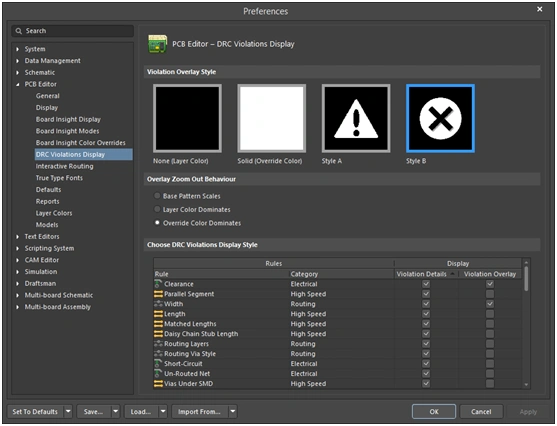
In 2026, DRC has evolved from a static "rules list" into a dynamic, context-aware verification process. It evaluates whether the physical layout of a PCB satisfies the specific geometric, electrical, and thermal constraints defined by modern fabrication plants like NextPCB.
While the fundamentals—checking clearances, trace widths, and hole sizes—remain, modern DRC now integrates AI-assisted validation. It doesn't just flag a violation; it often suggests the optimal rerouting path to maintain impedance control while satisfying manufacturing tolerances. Its primary function remains the same: ensuring high-reliability designs and maximum overall yield.
The boundary between DRC and DFM (Design for Manufacturing) continues to blur, yet they serve two distinct stages in the hardware lifecycle. In 2026, NextPCB bridges this gap using HQDFM, our proprietary industrial-grade analysis software.
By utilizing NextPCB's turnkey PCB services, designers can download and use the HQDFM desktop client to run a one-click manufacturing analysis. This provides a real-time DFM feedback loop that integrates directly with their design environment, ensuring that the Gerber files are "factory-ready" before they are even uploaded.
As of 2026, "standard" capabilities have shifted. What was considered advanced in 2023 is now the baseline for PCBA success.
With the miniaturization of BGA packages (0.3mm pitch), DRC settings must now accommodate tighter constraints.
Mechanical drilling is increasingly supplemented by UV Laser Drilling. DRC must now manage:
Modern PCBs carry more power in smaller footprints. DRC now includes "Copper Density Checks" to ensure even heat distribution and "Current Density DRC" to flag traces that might act as fuses under peak loads.
>> Recommend reading: PCB Thermal Design Basics (3): PCB Wiring Layout
The standout feature of 2026 is Generative DRC. Modern EDA tools now use machine learning models trained on millions of successful PCB manufacturing cycles. Instead of a simple "Error: Clearance 3mil," the AI-enhanced DRC will notify you: "This clearance violation in the DDR5 section will cause a 15% yield drop at current tolerances. Suggested fix: Move Via X by 2mil North."
In 2026, DRC is a financial tool. Design complexity directly dictates your quick turn PCB pricing.
A board is only as good as its assembly. PCBA in 2026 relies on ultra-high-speed robotic placement.
At NextPCB, we have upgraded our facilities to meet the 2026 turnkey PCB standards. Our internal systems integrate directly with your design data to provide:
Don't leave your 2026 project to chance. Upload your Gerber or ODB++ files to NextPCB and download our free HQDFM tool for a professional engineering review.
While Gerber remains popular, we highly recommend ODB++ or IPC-2581. These formats contain intelligent DRC data, including layer stackups and netlists, which significantly reduces the risk of manufacturing errors.
Your EDA's DRC only checks if you violated set parameters. HQDFM simulates the actual manufacturing and assembly process, detecting issues like "potential tombstoning" or "insufficient component clearance" that EDA tools often ignore but cause failures in the real world.
> More Details at HQDFM PCB Design Analysis Tool User Manual
6G requires extremely tight control over "Surface Roughness" and "Etch Factors." Your DRC must include strict rules for "Trace Chamfering" and "Stub Removal" to prevent signal reflection at frequencies above 100GHz.
Yes. Flexible and Rigid-Flex PCBs require specific DRC rules regarding "Bend Radius" and "Stiffener Clearance" to prevent copper cracking. Our 2026 DFM suite includes full support for flexible electronics.
> Check The most comprehensive introduction to FPC PCB design principles

Still, need help? Contact Us: support@nextpcb.com
Need a PCB or PCBA quote? Quote now