

Julia Wu - Senior Sales Engineer at NextPCB.com

 NextPCB Capabilities
Printed Circuit Boards
NextPCB Capabilities
Printed Circuit Boards
 PCB Assembly
 Layer Buildup
 SMD-Stencils
 PCB Design-Aid & Layout
 Mechanics
 Quality
 Drills & Throughplating
 Factory & Certificate
 PCB Assembly Factory Show
Certificate
PCB Assembly Factory Show
Certificate

Support Team
Feedback:
support@nextpcb.com


In the world of hardware development, the Printed Circuit Board (PCB) is the brain, but the cable assembly is the nervous system. A common oversight in PCB manufacturing projects is treating cabling as an afterthought. This often leads to integration failures, signal integrity issues, or costly delays during final assembly.
Whether you are sourcing a quick turn PCB for a prototype or planning high-volume production, understanding the engineering behind cable assemblies is critical. This guide covers the definitions, manufacturing standards, and design considerations you need to know in 2026.
Looking to source a cable assembly rather than design one from scratch? NextPCB now offers a dedicated custom cable assembly & wire harness manufacturing service covering 11 cable types with a guided online quotation platform.
A cable assembly is a group of wires or cables arranged into a single unit to transmit power or information. Unlike a loose collection of wires, an assembly is covered by an exterior sheath—typically rubber, vinyl, or shrink-wrapped thermoplastic—that protects the interior conductors from the environment.
While often used interchangeably with "wire harness," there is a technical distinction important for procurement:
For engineers focusing on turnkey PCB projects, specifying the correct type ensures your product passes safety certifications (UL, CE) and withstands its operating environment.
NextPCB's cable assembly service supports both categories—see the full breakdown of 11 cable and wire harness types we manufacture, from terminal harnesses to waterproof industrial cables.
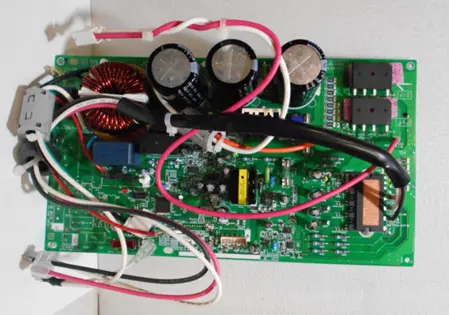
Figure 1: Custom cable assembly designed for secure signal transmission.
To ensure your low cost PCB project doesn't fail due to a cheap cable, you must select the right components. A robust cable assembly consists of three main layers:
The core wire carrying the current. In 2026, pure copper remains standard, but applications requiring high flexibility may use stranded tinned copper. Engineers must calculate the correct American Wire Gauge (AWG) to handle the current load without overheating.
The material choice here dictates the cable's survival:
These three cover the most common cases. For applications needing silicone, XLPE, PE, FEP, rubber, or LSZH jacketing, see the full list of insulation materials NextPCB supports.
This is where the cable meets the PCBA. Common types include crimp-style (Molex/JST), soldered cups (DB9), or IDC (Insulation Displacement Connectors). The trend in 2026 is moving towards locking connectors (like JST-GH) to prevent disconnection during vibration.
Not sure which connector family fits your design? Our PCB connector types guide breaks down JST, Molex, IDC, D-Sub, RF, and USB connectors in more detail.
Design for Manufacturing (DFM) applies to cables just as much as it does to PCB manufacturing. When designing your assembly, consider these four pillars:
Where will the cable live? If it is exposed to sunlight, UV-resistant black jackets are mandatory. If it is used in automotive or medical settings, resistance to oil, chemicals, and sterilization fluids must be specified. Failure to define this can lead to jacket cracking and short circuits.
With modern electronics becoming denser, Electromagnetic Interference (EMI) is a major concern. Unshielded cables act as antennas, picking up noise that can disrupt your sensitive PCB assembly.
Is the cable static (fixed behind a wall) or dynamic (attached to a moving print head)?
For dynamic applications, the "bend radius" is critical. You must ensure the cable assembly includes proper strain relief (overmolding or cable glands) at the connector end. This prevents the wire from snapping off the solder pads due to fatigue.
Beyond voltage and current, consider impedance matching. For high-speed data (USB, Ethernet), the impedance of the cable must match the PCB traces (typically 90 or 100 ohms) to prevent signal reflection.
A common friction point in hardware manufacturing is sourcing PCBs from one vendor and cables from another. This leads to "finger-pointing" when connectors don't fit.
From a design standpoint, three things should be on your checklist before you send a cable assembly out for manufacturing alongside your PCBA:
Pro Tip: When submitting your Gerber files for a quick turn PCB order, always upload the datasheets for any wire-to-board connectors. This allows our engineers to validate the footprint immediately.
For the full list of connector families, cable types, and how NextPCB integrates cable assembly directly into a turnkey PCBA build, see our Cable Assembly & Wire Harness Manufacturing service page.
Reliability is non-negotiable. Professional cable assembly manufacturing should adhere to the IPC/WHMA-A-620 standard (Requirements and Acceptance for Cable and Wire Harness Assemblies).
At NextPCB, our testing protocol includes:
This rigorous approach ensures that the cable assembly functions as safely as the circuit board it connects to.
Yes. Beyond bundling cables with a turnkey PCB order, NextPCB now runs a standalone custom cable assembly & wire harness manufacturing service with a 1-piece minimum, so you can order standard cables or fully custom harnesses to your drawing specifications—with or without an accompanying PCB order.
Off-the-shelf cables have fixed lengths and pinouts. Custom assemblies allow you to specify exact lengths (saving space), specific pin mappings, and specialized jacket materials, often necessary for compact or industrial designs.
Use standard connectors (like generic equivalents to expensive brands) where possible, and avoid over-specifying the length or jacket rating beyond what your operating environment actually requires.
You can configure your cable type, connectors, and specifications directly through NextPCB's online cable assembly quotation platform, which supports everything from single-piece prototypes to full production volumes.
Don't let poor cabling compromise your high-quality circuit boards. NextPCB provides industrial-grade PCB assembly and custom cable integration services trusted by engineers worldwide.
Whether you need a prototype in 24 hours or mass production support, we are your one-stop solution.

Still, need help? Contact Us: support@nextpcb.com
Need a PCB or PCBA quote? Quote now