NextPCB Capabilities
Printed Circuit Boards
NextPCB Capabilities
Printed Circuit Boards
 Process Capabilities
 PCB Design-Aid & Layout
 Quality
 Drills & Throughplating
 Factory & Certificate
 PCB Assembly Factory Show
Certificate
PCB Assembly Factory Show
Certificate

Support Team
Feedback:
support@nextpcb.com


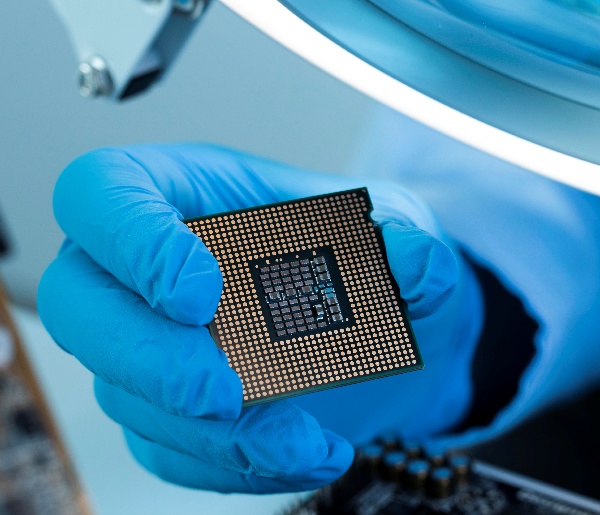
Ball Grid Array (BGA) packaging is essential for high-density, high-performance electronic devices. NextPCB provides reliable BGA assembly services for complex applications, ranging from micro-BGAs in wearables to large ceramic BGAs in aerospace. This guide outlines the critical design, process, and quality control parameters for BGA manufacturing.
Core Principle:
BGAs replace traditional perimeter leads with an array of solder balls underneath the component package. This structural design delivers:
Related Reading: Top 9 Most Common IC Packaging Types in Modern Electronics
| Type | Name | Key Properties | Best Applications |
|---|---|---|---|
| P-BGA | Plastic BGA | Cost-effective, moisture-sensitive | Consumer devices, routers |
| F-BGA | Flip-Chip BGA | Ultra-thin profile, fine pitch (<0.5mm) | Smartphones, micro-BGA packages |
| C-BGA | Ceramic BGA | Extreme thermal and mechanical resilience | Automotive, aerospace, defense |
| T-BGA | Tape BGA | Flexible interconnects, excellent heat dissipation | Medical sensors, high-power ICs |
PCB Treatment:
Component Prep:
| Parameter | Standard BGA | Micro-BGA |
|---|---|---|
| Solder Paste | Type 4 (20-25μm) | Type 5 (10-15μm) |
| Stencil Ratio | 1:1 | 0.85:1 (Nano-coated) |
| Placement Accuracy | ±30μm | ±15μm |
| Vision System | 2D Alignment | 3D Laser Scanning |
Related Reading: What You Need to Know About BGA Soldering
| Failure Mode | Detection Method | Prevention Strategy |
|---|---|---|
| Non-Wet Opens (NWO) | Cross-section SEM / X-Ray | Optimize flux activation temperature profile |
| Solder Ball Cracks | Dye-and-Pry Test | Apply corner underfill or edge bonding |
| Pad Cratering | TDR Testing / Cross-section | Utilize Low-CTE PCB substrate materials |
| Popcorning (MSD Failure) | CSAM (C-Mode Scanning) | Enforce strict moisture floor life control (J-STD-033) |
NextPCB's Roadmap for Next-Gen BGA Solutions:
NextPCB delivers certified IPC-7095E manufacturing processes tailored to your specific needs:
Get Real-Time Pricing: Click for Instant BGA Online Assembly Quote
Q1: How accurate are NextPCB's online BGA assembly quotes?
Our online quoting system factors in real-time material costs, IPC class specifications, and project complexity. Most quotes are highly accurate and remain valid for 30 days. For projects involving complex layouts or special process requirements, we recommend consulting our engineering team to confirm final pricing.
Q2: What is the minimum BGA pitch NextPCB supports?
We support BGA packages with a minimum pitch of 0.25 mm, including 100% X-ray inspection for all BGA solder joints. If your design requires finer pitch (e.g., 0.20 mm), please contact our engineering team for a feasibility assessment.
Q3: Can you repair cracked BGA solder joints caused by thermal cycling?
Yes. We provide professional BGA rework services using precision rework stations and X-ray verification. If your repair process requires underfill injection or Scanning Acoustic Microscopy (SAM), please consult us to evaluate custom solutions.
Q4: How does BGA vs QFN assembly affect signal integrity?
BGA packages offer significantly lower parasitic inductance (<0.1 nH), making them ideal for RF and high-speed digital applications above 800 MHz. QFN packages are more suitable for simpler designs where visual inspection and lower cost are priorities. For GHz-level performance, BGA is universally recommended.
Q5: What level of IPC-7095E compliance do you offer for BGA assembly?
We support full IPC-7095E Class 3 assembly standards upon request, including 100% X-ray inspection, void control, and traceability under ISO 9001 quality management. If you require specific voiding thresholds (e.g., ≤5%), please indicate this in your RFQ parameters.
Q6: Can you integrate soldered cold plates in BGA assemblies with thermal resistance ≤0.15°C/W?
At present, soldered cold-plate integration is not part of our standard automated service offering. If your project requires advanced integrated thermal management (e.g., bonded copper plates, specialized thermal interface materials), please provide detailed mechanical and thermal specifications for manual engineering evaluation.
You may also be interested in:
Still, need help? Contact Us: support@nextpcb.com
Need a PCB or PCBA quote? Quote now




 PCB Assembly