

Stacy Lu

 NextPCB Capabilities
Printed Circuit Boards
NextPCB Capabilities
Printed Circuit Boards
 PCB Assembly
 Layer Buildup
 SMD-Stencils
 PCB Design-Aid & Layout
 Mechanics
 Quality
 Drills & Throughplating
 Factory & Certificate
 PCB Assembly Factory Show
Certificate
PCB Assembly Factory Show
Certificate

Support Team
Feedback:
support@nextpcb.com


Introduction
This report provides an in-depth analysis of the current state of the wearable technology market and the evolution of its core components. The market is undergoing a fundamental transformation, with devices shifting from single-task fitness trackers to "wrist-worn micro-computers" capable of running rich applications and providing highly interactive experiences. This transition is driven by a growing consumer demand for seamless device integration and powerful features that extend the smartphone ecosystem to their bodies.
The key finding of this report is that the central challenge in wearable device design lies in the fundamental trade-off between computing performance and power efficiency. Component manufacturers are addressing this by developing specialized chips, such as the ultra-low-power Nordic nRF52/53 series and the high-performance ESP32-S3, which represent two distinct technological paths to solving this problem.
The strategic recommendation of this report is that developers must make decisions based on a clear product strategy. The primary task is to determine whether the product's priority is maximum battery life or a rich, interactive user experience, as no single solution can currently satisfy both extremes. The report suggests that the future lies in architectural innovation that intelligently and dynamically manages the performance-power balance to achieve a better combination of both.
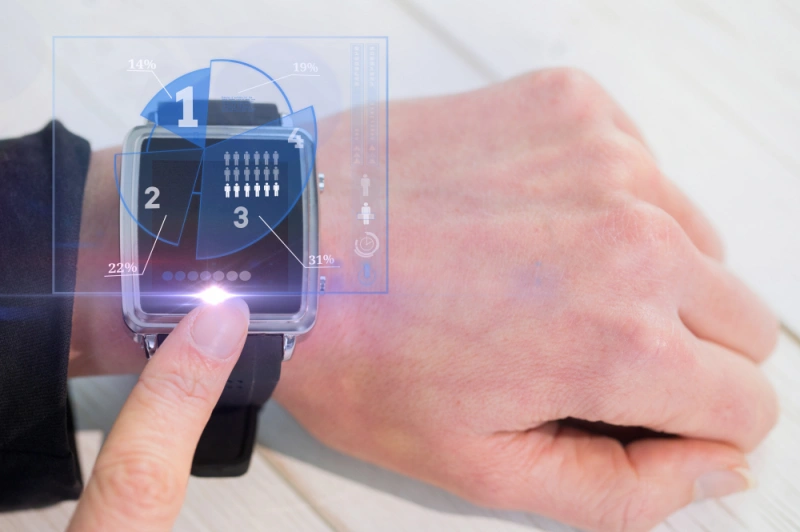
The growth of the wearable device market has been a gradual process, driven by both consumer demand and technological capability. Initially, the market was dominated by simple fitness trackers that achieved early success by recording basic health metrics like steps and heart rate. This success proved consumer interest in personal health data and laid the market's foundation. However, as the market matured, consumer expectations rose. They are no longer satisfied with passive data collection and are now seeking seamless device integration, vivid color displays, and the rich functionality of smartphone-like applications. This demand has fundamentally changed the role of the device.
This shift from a "tracker" to a "micro-computer" is more than just a simple technological upgrade; it represents a fundamental change in the device's role in the user's life. A simple tracker is a data-gathering tool whose primary function is to capture and log information. A "micro-computer," however, is a personal computing platform that extends the smartphone experience to the user's body, becoming a more active and interactive tool. This redefinition of the device's role has also created a new competitive landscape where the focus is no longer just on hardware specifications but is driven by software ecosystems and user experience.
Early wearable devices, such as the first-generation fitness bands, used basic sensors and microcontrollers (MCUs) focused on low power consumption to maximize battery life. However, the market's demand for richer features—such as color screens, application support, and cellular connectivity—created a need for greater processing power, more memory, and stronger graphics performance. This demand created a "performance deficit" within the capabilities of low-power chips. To bridge this gap, the industry responded swiftly by creating a new class of components, such as "crossover MCUs," which bridge the gap between traditional MCUs and high-power application processors. The emergence of these chips is a direct response to a market shaped by consumer-driven evolution.
The wearable device market can be segmented by its core use cases, such as smartwatches, smart hearables (earbuds with smart features), and dedicated health monitoring devices. Each category has unique component requirements. Smartwatches need powerful processing and graphics engines to support complex operating systems and high-resolution displays; smart hearables need extremely low power and efficient signal processing; and dedicated health monitors need sensors and power management units that can achieve long-term, continuous monitoring with minimal energy consumption. This market segmentation provides the context for the subsequent component analysis.
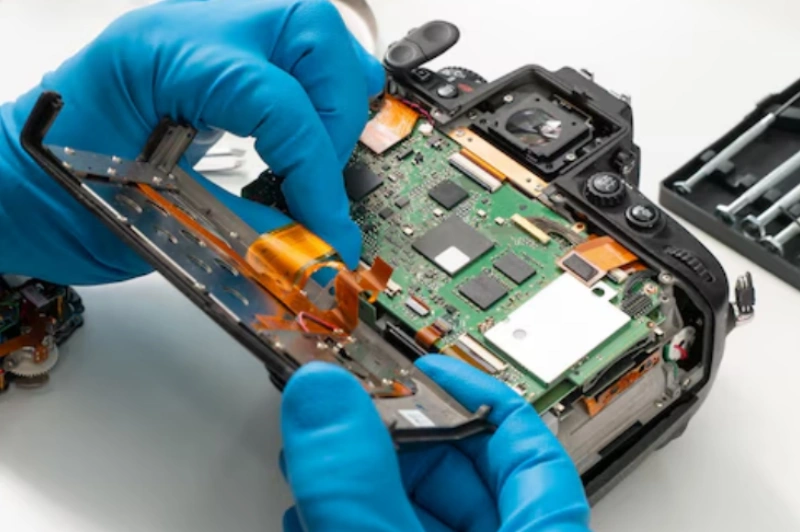
At the heart of wearable device design is a critical decision that revolves around the trade-off between performance and energy efficiency. This is not merely a technical choice but a strategic one that defines the product's market position and value proposition. The choice is whether to build a powerful, responsive "micro-computer" or to design a lightweight, infrequently charged "constant health companion." These two paths dictate the entire component selection logic that follows.
To illustrate this core dilemma, this report will provide an in-depth analysis of two representative chips and their surrounding component ecosystems: the high-performance ESP32-S3 and the ultra-low-power Nordic nRF52/53 series.
> Recommend reading: Explore Embedded AI with ESP32-S3 and Free PCBA Prototypes - NextPCB Accelerator #4
> Recommend reading: Unlock Next-Gen Cellular IoT with Nordic's nRF9161 SiP - NextPCB Accelerator #15
For devices that demand a rich feature set and a powerful interactive experience (such as smartwatches or smart glasses), the core processing unit must prioritize performance. The ESP32-S3 is a prime example designed for such applications.
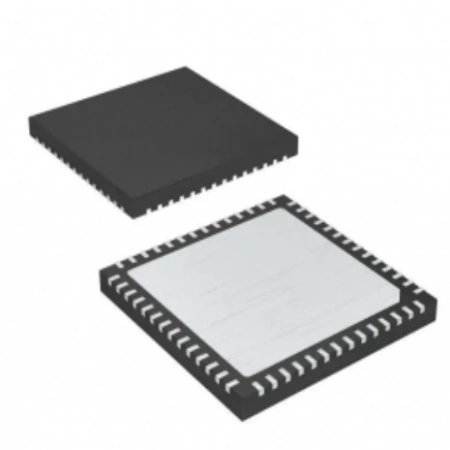
The core value of the ESP32-S3 lies in its highly integrated, performance-driven architecture. It features a dual-core Xtensa LX7 processor with a clock speed up to 240 MHz and built-in Wi-Fi and Bluetooth connectivity. This eliminates the need for separate wireless communication modules and enables high-speed data transfer for applications like voice encoding and music streaming. For devices requiring continuous network connectivity and rich interaction, the ESP32-S3 ensures a fluid user experience.
To manage the power challenge that comes with high performance, the ESP32-S3 includes several power modes. It can enter Modem-sleep and Light-sleep modes while Wi-Fi is enabled, which significantly reduces power consumption without disconnecting. For extended periods of inactivity, Deep-sleep or Hibernation modes can bring power consumption down to the microampere range, maximizing battery life.
Once the ESP32-S3 is chosen as the performance core, all other components are selected to align with the goal of providing the best possible user experience.
For devices that prioritize maximum battery life and have a relatively streamlined feature set (such as fitness bands, medical patches, or smart rings), energy efficiency is the absolute top priority. The Nordic nRF52/53 series is the benchmark in this category.
The core advantage of the Nordic nRF52 and nRF53 series lies in their outstanding power management capabilities. The nRF52840 uses an ARM Cortex-M4F core, while the more advanced nRF5340 features a dual-core ARM Cortex-M33 architecture, with one core dedicated to performance and the other to low power consumption. This design allows the series to handle complex tasks while maintaining low power draw. Its various sleep modes, such as System On and System Off, can reduce idle power consumption to the microampere range. This makes the series ideal for applications that spend most of their time in standby or deep sleep, only waking periodically for data collection and transmission.
When Nordic is chosen as the core, the component selection logic shifts to maximizing battery life.
An experienced electronics enthusiast knows that a successful wearable project's success depends on more than just the core processor and sensors. They are more interested in the "unassuming" details because these often determine a project's success, stability, and user experience.
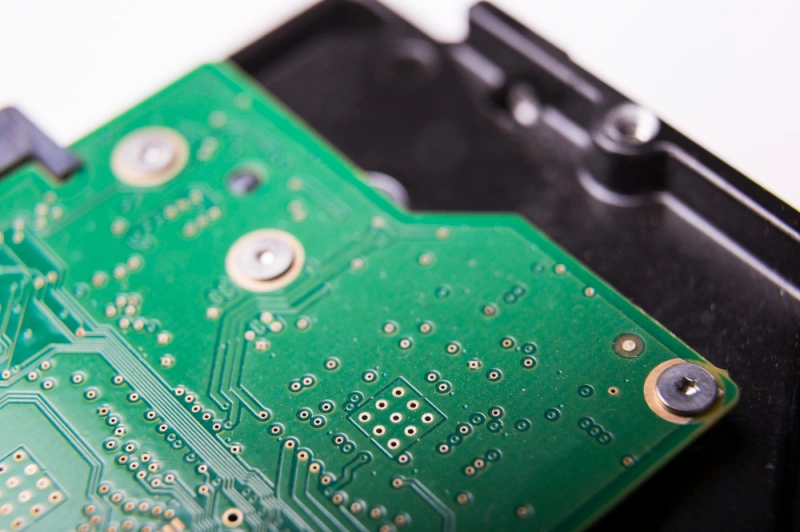
For wearable devices, battery life is the lifeline. A true enthusiast will study a chip's power modes in depth and understand how to use software and hardware design to maximize them.
ESP32's Multi-Level Sleep: The ESP32-S3 series offers various sleep modes to balance performance and power. Modem-sleep and Light-sleep modes allow the chip to reduce power consumption while keeping Wi-Fi or Bluetooth connected. Deep-sleep and Hibernation modes can reduce power to the microampere level, but at the cost of the CPU losing its context, requiring a full reboot upon waking.
> Recommend reading: KiCad 9: Design & assemble an ESP32 IoT 4-layer PCB
Nordic's Extreme Power Saving: In contrast, the Nordic nRF52/53 series is known for its excellent power management, with power consumption far lower than the ESP32 series in idle states. Its System On and System Off modes can reduce power consumption to the microampere range, making it ideal for applications with high battery life requirements, such as long-term monitoring.
The Voltage Divider Trap: Experienced developers know that even simple passive components can consume power. A voltage divider used to measure battery voltage, if poorly designed, can constantly draw more current than the main chip's sleep consumption. By using a GPIO pin to control the divider's power, a developer can avoid this "invisible" power drain by only enabling it when a measurement is needed.
Hobbyists don't just care about the sensors themselves; they care about how to make them work perfectly with the main microcontroller.
> Recommend reading: RoHS-Lead Free
In a final product design, connectors and protection components are critical for ensuring reliability and durability.
A seasoned electronics enthusiast also pays attention to the entire development ecosystem.
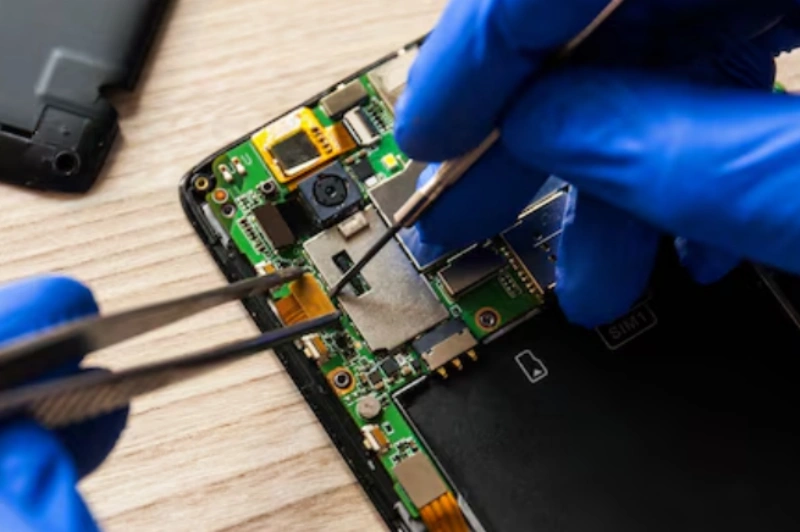
From our vantage point as a leading PCB manufacturer and assembly service provider, the convergence of high-performance and ultra-low-power architectures is not just a theoretical trend; it's a daily challenge we help our clients overcome. This evolution directly translates into more complex, demanding requirements for the foundational circuit board itself.
Bringing these highly integrated Systems-on-Chip (SoC) and System-in-Package (SiP) designs to life requires a partner who understands the new frontiers of PCB fabrication and assembly. As wearable devices shrink and pack in more functionality, the physical real estate for components disappears. This demands advanced manufacturing techniques like High-Density Interconnect (HDI) boards with blind and buried vias to enable the complex routing required for powerful multi-core processors. It also necessitates the precision for placing and soldering the smallest 0201 and even 01005 passive components, which would be impossible with standard processes.
Furthermore, the seamless integration of various wireless technologies—Bluetooth, Wi-Fi, and UWB—on a single board requires meticulous RF design and precise impedance control, which we support through specialized materials and fabrication expertise. And as high-performance SoCs generate more heat in a confined space, effective thermal management becomes critical, a challenge we address by incorporating thermal vias and specific copper pour designs into our manufacturing process.
At NextPCB, we see ourselves as more than just a component supplier; we are an essential partner in the innovation pipeline. We provide the high-precision PCB manufacturing and streamlined assembly services that turn a brilliant concept into a reliable, mass-produced product. We stand ready to support the next generation of wearable innovators, ensuring that the physical foundation of their designs is as advanced as the chips they are built upon, enabling them to bring the future of wearable technology to market faster and with greater confidence.

Still, need help? Contact Us: support@nextpcb.com
Need a PCB or PCBA quote? Quote now