

 NextPCB Capabilities
 PCB Assembly
 Layer Buildup
 SMD-Stencils
 PCB Design-Aid & Layout
 Mechanics
 Quality
 Drills & Throughplating
 Factory & Certificate

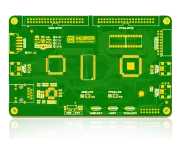
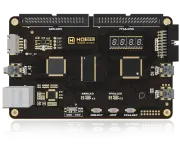


If you're sourcing bare PCBs from one vendor and sending them to a separate assembly house, you're managing two supply chains, two sets of lead times, and two points of failure for one product. A one-stop PCB manufacturing and assembly service — commonly called turnkey — combines fabrication, component sourcing, assembly, and testing under a single vendor and a single order.
This guide covers what turnkey actually means (and how it differs from partial turnkey and consignment), what the process looks like end to end, what to check before choosing a partner, and how NextPCB's turnkey service is structured.
- Table of Contents
- What "Turnkey" Actually Means — and How It Differs from Partial Turnkey
- Why Combine Manufacturing and Assembly Under One Vendor
- What the One-Stop Process Looks Like, Step by Step
- What to Check Before Choosing a Turnkey Partner
- How NextPCB's Turnkey Service Works
- FAQ
What "Turnkey" Actually Means — and How It Differs from Partial Turnkey
In PCB manufacturing, these terms get used loosely, so it's worth being precise:
- Full turnkey: The manufacturer handles everything — PCB fabrication, sourcing every component on your BOM, assembly, and testing. You provide design files (Gerbers, BOM, centroid/pick-and-place file); they deliver finished boards.
- Partial turnkey: A hybrid model. You supply some components yourself (for example, hard-to-source or already-purchased parts) while the manufacturer sources the rest and handles fabrication and assembly.
- Consignment: You supply all components; the manufacturer only fabricates the board and performs assembly labor. You carry the sourcing risk and lead time for every part.
Full and partial turnkey exist specifically to remove sourcing risk from your side of the project — component shortages, counterfeit parts, and long lead times on obsolete or high-demand ICs are the manufacturer's problem to solve, not yours.
Why Combine Manufacturing and Assembly Under One Vendor
The case for turnkey gets stronger the further your supply chain is from your own location. With a local fabricator and a local assembly house, splitting the two isn't a major cost — shipping between them is fast and cheap. With an overseas manufacturer, splitting fabrication and assembly means shipping bare boards internationally before they're even populated, which adds a full freight cycle, customs clearance, and a second point where boards can be damaged in transit — before assembly has even started.
Beyond logistics, a single vendor for both stages means:
- One quality accountability chain. If a board fails, there's no ambiguity about whether the fabrication or the assembly stage caused it — one company owns the outcome.
- Fewer shipments overall. Fewer shipments mean fewer opportunities for delay, damage, or (for international orders) additional customs handling per shipment.
- Simpler project management. One point of contact, one quote, one timeline — instead of coordinating two vendors' schedules against each other.
What the One-Stop Process Looks Like, Step by Step
- Design file submission: You upload Gerber files, a BOM (bill of materials), and a centroid/pick-and-place file.
- DFM/DFA review: The manufacturer checks the design for manufacturability and assembly issues — footprint mismatches, thermal risk, spacing problems — before production starts, catching problems that are expensive to fix once boards are built.
- Component sourcing: For full or partial turnkey, the manufacturer procures the BOM from authorized distributors or in-stock inventory.
- PCB fabrication: The bare board is produced — layers, drilling, plating, solder mask, silkscreen.
- Assembly: Components are placed and soldered via SMT, THT, or a hybrid process depending on the design.
- Inspection and testing: AOI (automated optical inspection), X-ray for hidden joints (e.g. BGAs), and functional testing against your specification.
- Shipping: The finished, tested PCBA ships as one consolidated order.
What to Check Before Choosing a Turnkey Partner
- In-house vs. subcontracted stages. Ask specifically whether fabrication and assembly both happen in the manufacturer's own facilities, or whether one stage is subcontracted out — subcontracting reintroduces the coordination and quality-accountability problems turnkey is supposed to solve.
- Component sourcing transparency. Ask where components are sourced from and how authenticity is verified. Counterfeit or gray-market parts are a real risk in high-demand or obsolete component categories.
- DFM/DFA review included or extra. Confirm whether design review is a standard part of the process or a paid add-on.
- Documented certifications. For regulated or high-reliability applications, ask for current certification documents (ISO 9001, IATF 16949, IPC Class 2 vs Class 3 workmanship) rather than relying on marketing claims.
- MOQ and BOM line flexibility. Some turnkey providers have minimum order quantities per component line; if your BOM has many low-quantity or unusual parts, confirm this won't be a bottleneck.
- What happens if a part goes obsolete mid-project. Ask how the manufacturer handles component substitutions and whether you're consulted before a substitution is made.
How NextPCB's Turnkey Service Works
NextPCB offers full turnkey (manufacturing, component sourcing, assembly, and functional testing under one order), partial turnkey (you supply some components, NextPCB sources the rest), and consignment (you supply all components) — so you can choose the model that matches how much sourcing risk you want to hand off.
A few specifics of how the service is structured:
- Component sourcing via HQ Online: NextPCB's own component inventory platform, HQ Online, gives direct access to a large in-stock component catalog alongside sourcing from authorized distributors, which supports faster fulfillment on full and partial turnkey orders.
- DFM/DFA included: Free design-for-manufacturability and design-for-assembly review is a standard part of the process, not a paid add-on, aimed at catching issues like thermal bottlenecks or footprint mismatches before production.
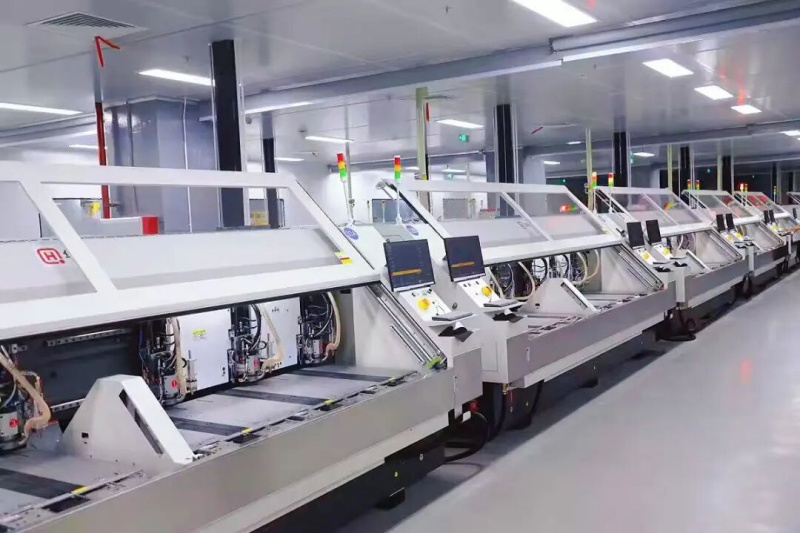
- In-house fabrication and assembly: Both stages run through NextPCB's own facilities rather than being subcontracted, which is what keeps quality accountability with a single vendor.
- Inspection and testing: Automated optical inspection and X-ray inspection are standard on assembly lines, with functional testing available to verify the finished PCBA against your specification.
- Certifications: NextPCB's facilities hold ISO 9001, ISO 13485, and IATF 16949 certification, and work is performed to IPC-6012 and J-STD-001 standards, with IPC-A-610 Class 2 workmanship as standard and Class 3 available for high-reliability applications. See the Certificate page for current documentation.
- Turnaround: Prototype-stage orders can move quickly, with expedited options available for time-sensitive projects — confirm current lead times for your specific board and volume when you request a quote.
If your project also needs to ship into the EU or is comparing US-based options, see the related guides: How to Choose a PCB Manufacturer for the European Market and How to Choose a PCB Manufacturer in the USA. For assembly-specific capabilities, see the PCB Assembly Services page, and for low-volume/first-run orders, see Rev 0 PCBA.
FAQ
What's the difference between turnkey and partial turnkey?
Full turnkey means the manufacturer sources every component on your BOM. Partial turnkey means you supply some components yourself — often parts you've already purchased or that are hard for the manufacturer to source — while the manufacturer handles the rest, plus fabrication and assembly.
Is turnkey more expensive than sourcing components myself?
Not necessarily. Manufacturers with large in-stock inventories and distributor relationships can often source common components at competitive prices, and turnkey avoids the hidden costs of managing your own procurement, shipping components to the assembler, and absorbing delays from a missing part.
Can I switch from consignment to turnkey partway through a project?
Generally yes, especially between production runs — for example, sourcing your own components for a prototype run and switching to partial or full turnkey for a production-volume order once the design is finalized. Confirm this flexibility with your manufacturer before committing to one model.
What happens if a specified component is out of stock?
A good turnkey partner will flag this during the quoting or DFM stage and propose an alternative for your approval, rather than making a substitution without informing you. Ask about this process specifically before placing an order.
Do I need to specify a panel layout for assembly?
Usually not. Panelization (arranging boards into a panel for assembly) is typically handled by the manufacturer based on their equipment, unless your project has specific spacing or tooling constraints you need to communicate in advance.
Have a design ready? Get an instant quote for full turnkey, partial turnkey, or consignment PCB manufacturing and assembly.