

 NextPCB Capabilities
 PCB Assembly
 Layer Buildup
 SMD-Stencils
 PCB Design-Aid & Layout
 Mechanics
 Quality
 Drills & Throughplating
 Factory & Certificate

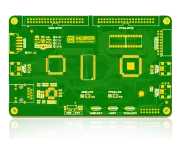
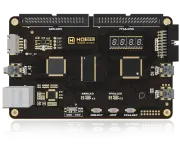


Looking for real, working PCB project ideas instead of another theoretical tutorial? Below are eight custom PCB and PCBA builds from independent hardware makers — each one a fully documented, open-source project you can study, remix, or use as a starting point for your own board. Several lean hard into retro and geek-culture territory (cosplay props, replica consoles, forgotten circuit topologies rebuilt from scratch), because that is where a lot of makers on Hackster.io, Hackaday.io, and Instructables like to experiment first — but the design decisions, DFM checks, and fabrication workflow behind them apply to any custom PCB project, retro-themed or not.
Several of these builds were developed with free PCBA prototypes from the NextPCB Accelerator program. Each project below links back to the original build log so you can dig into the schematics, code, and assembly notes yourself.
Got a build like these sitting in your sketchbook? The NextPCB Accelerator program covers PCBA costs—including logistics—for qualifying open-source and independent hardware projects.
See If Your Project Qualifies- In This Article
- 1. Zenkai Engine — A Dragon Ball–Inspired Motivation Machine
- 2. Motorola DynaTAC MAX — A Brick Phone Reborn
- 3. Mega Man’s Mega Buster — A Working Arm Cannon Replica
- 4. SHIPx86 — A Cartridge-Reading Retro PC Shell
- 5. 1940s-Style Guitar Effects Pedal
- 6. DIY Moai Soap Dispenser
- 7. Pico VGA Board 1.0 — VGA Output From an RP2040
- 8. ELF Sensor — A Low-Frequency Field Detector
1. Zenkai Engine — A Dragon Ball–Inspired Motivation Machine
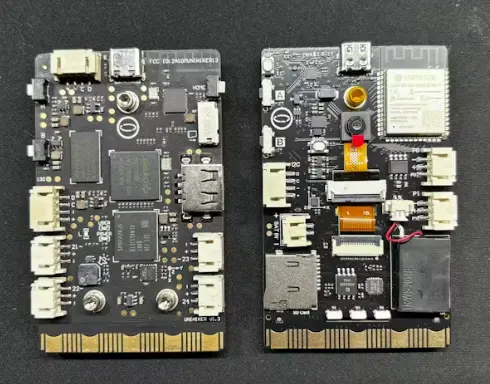
Maker Arnov Sharma built the Zenkai Engine after a frustrating multi-hour debugging session, naming it after the Dragon Ball concept of growing stronger after a defeat. Press the Dragon Ball–shaped external button and the device plays a short animated sequence paired with a one-minute motivational voice clip, then powers the display down after a period of inactivity to save energy.
The build runs on a DFRobot UNIHIKER K10 single-board computer and uses a custom PCB breadboard of Sharma’s own design as the electronics base — the same reusable prototyping board later reused across several of his other projects in this list. It includes a SOIC-8 footprint for SMD MOSFETs, a WS2812B addressable RGB LED footprint, and USB-C power input with reverse-polarity protection. The Gerber files were sent to NextPCB for fabrication with a yellow solder mask and white silkscreen, and verified beforehand using NextPCB’s free online Gerber Viewer and DFM tool.
See the full build log on Hackster.io, or check the project’s Instructables and Hackaday.io pages for additional build photos.
Have your own Gerbers ready? Run them through the free Gerber Viewer and DFM tool above, then get real-time pricing on your bare PCB in minutes.
Get Your Instant PCB Quote2. Motorola DynaTAC MAX — A Brick Phone Reborn
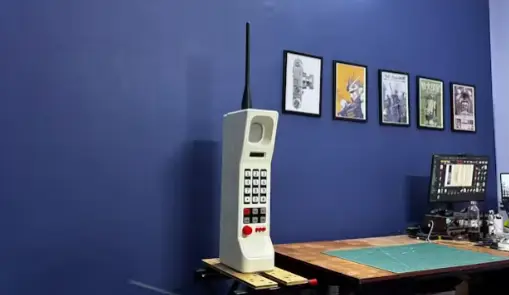
The Motorola DynaTAC is the phone most people picture when they think “1980s brick phone,” and this project rebuilds one from the ground up as a functional device rather than a static prop. It is part of the same custom-PCB-breadboard family of builds as the Zenkai Engine, giving the creator a reusable, solder-friendly base to prototype the internal electronics before committing to a final board layout.
As with the other projects in Arnov Sharma’s build series, the design work was verified with NextPCB’s free Gerber Viewer before ordering, and the finished boards came back with the same fast turnaround the maker highlights across his other Accelerator-supported builds.
Read the full write-up on Hackster.io, or see the companion posts on Instructables and Hackaday.io.
3. Mega Man’s Mega Buster — A Working Arm Cannon Replica
Few retro props are as instantly recognizable as Mega Man’s arm cannon, and this full-size replica does not stop at looking the part. A Raspberry Pi Pico drives a sequence of LEDs and sound effects through a PAM8403 class-D audio amplifier and a small salvaged speaker, simulating the classic charge-and-fire blaster effect, complete with a six-shot “power meter” and a cooldown period once the meter runs out.
The body was modeled in Fusion 360 and 3D printed in sections, while the electronics live on a custom PCB assembled using solder paste and a reflow hot plate. As with several of Sharma’s other builds, the Gerber data was sent to NextPCB for fabrication, and the project explicitly credits the NextPCB Accelerator program for making the assembly step accessible.
Full build details are on Hackster.io, with additional coverage on Instructables and Hackaday.io.
4. SHIPx86 — A Cartridge-Reading Retro PC Shell
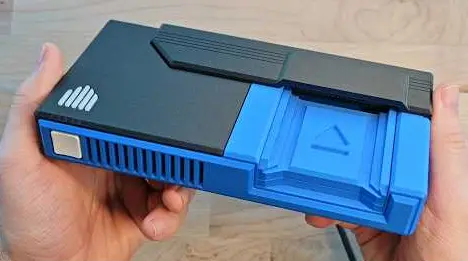
SHIPx86 reimagines the classic desktop PC as a cartridge-loading retro machine, blending an x86-compatible core with a physical media-reading mechanism reminiscent of console cartridges rather than optical drives or USB sticks. It is a more experimental entry on this list — part case mod, part functional computer — and a good example of how far the “retro reinterpretation” trend has traveled beyond simple enclosure swaps.
See the source code and hardware notes on GitHub.
5. 1940s-Style Guitar Effects Pedal
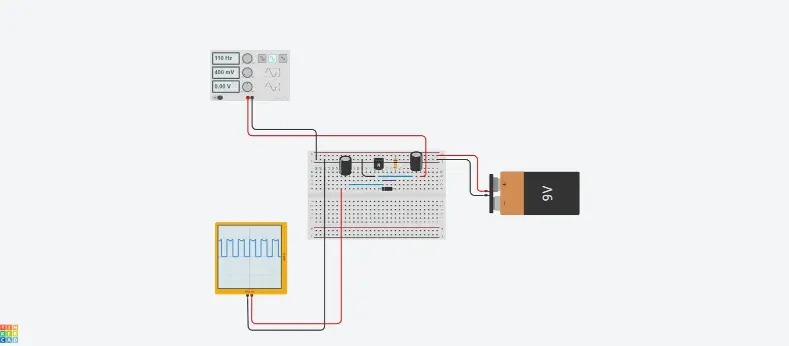
This project takes a different approach to “retro” — instead of recreating a specific object, it recreates a design era. The build follows 1940s point-to-point circuit conventions for a guitar fuzz-style effects pedal, reinterpreting vintage layout and component choices on a modern custom PCB rather than the tangle of hand-wired components a build like this would have used originally.
The creator credits NextPCB’s PCB manufacturing and assembly services directly for taking the project from schematic to a working physical pedal, noting how much more accessible small-batch PCB fabrication has made this kind of period-accurate circuit experimentation for independent builders.
Read the full 14-step build on Instructables.
Want to build something like this yourself? Order fast-turn PCBA prototyping through Rev0 — a 7-working-day turnaround, ideal for small-batch maker builds like the pedal above (5–10 pcs minimum).
Order Rev0 PCBA Prototype6. DIY Moai Soap Dispenser
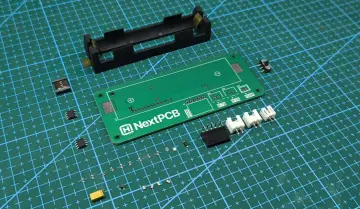
Not every geek-culture build is about game consoles and comic book gadgets — sometimes it is about giving your bathroom counter an Easter Island head that dispenses soap. This project pairs a marble-textured PLA 3D print with a motion-triggered dispensing mechanism and custom electronics, turning a novelty object into a genuinely useful desk or sink accessory.
It is a good showcase of how approachable small custom PCBs have become for hobby projects that blend 3D printing, basic sensing, and a bit of personality — not every build needs to be a retro console replica to be worth documenting.
See the full 21-step build on Instructables.
7. Pico VGA Board 1.0 — VGA Output From an RP2040
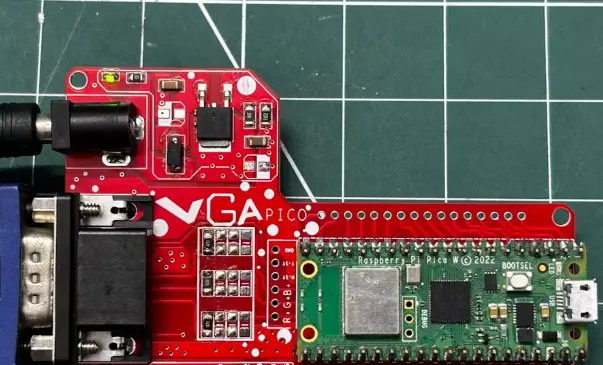
Before you can build a retro-styled game or terminal emulator, you need something to actually display it on. Pico VGA Board 1.0 wires a D-Sub 15-pin VGA connector directly to a Raspberry Pi Pico, using the RP2040’s PIO peripherals to generate the analog Red, Green, and Blue signal lines plus the HSYNC and VSYNC timing signals VGA monitors expect — entirely without a dedicated video chip.
The board has since become the display backbone for several of the creator’s later projects, including a Space Invaders–style game and a retro-terminal-styled boot screen, making it a genuinely reusable piece of infrastructure rather than a one-off demo.
Full schematic and code walkthrough on Hackster.io, or see the companion Instructables guide.
8. ELF Sensor — A Low-Frequency Field Detector
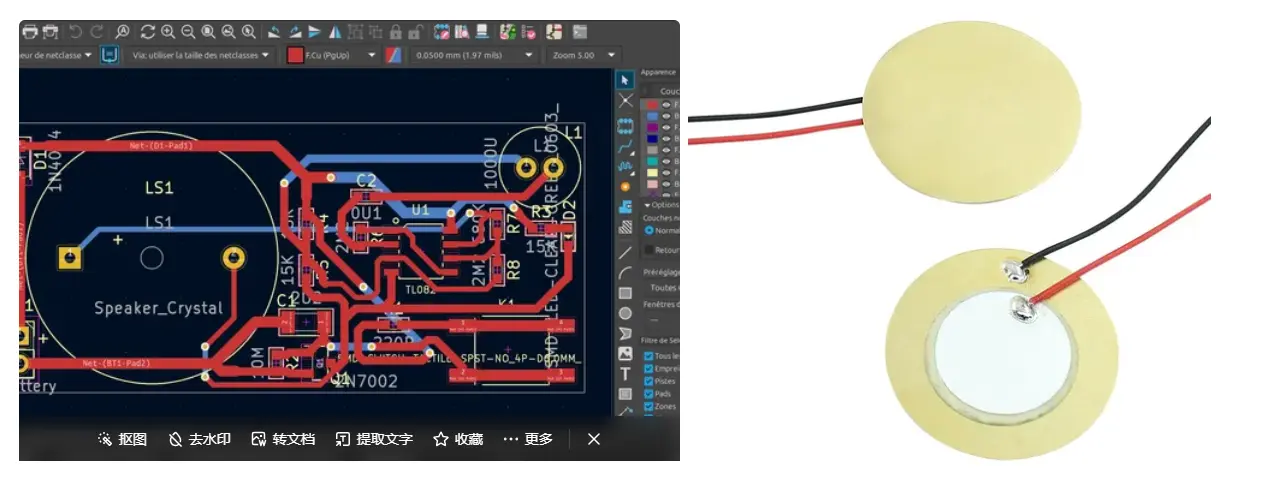
Rounding out the list is a project from the more experimental end of the maker spectrum: a handheld sensor built to pick up extremely low-frequency (ELF) electromagnetic activity, the kind produced by power lines, old CRTs, and other everyday sources of electrical noise. It is a favorite build category among electronics hobbyists who grew up on ghost-hunting shows and science fair EMF detectors alike, and a genuinely approachable way to learn how coil-based sensing and signal amplification work in practice.
See the full build on Instructables.
Ready to Build Your Own?
Several of the makers featured above got their boards fabricated and assembled for free through the NextPCB Accelerator program, which covers PCBA costs (including logistics) for qualifying open-source and independent hardware projects. If you have a retro build, a cosplay prop, or any other creative PCB idea sitting in your sketchbook, it is worth a look.
Before you send your Gerbers anywhere, it is also worth running them through NextPCB’s free online Gerber Viewer and DFM tool to catch design issues before they become a re-spin.