

 NextPCB Capabilities
 PCB Assembly
 Layer Buildup
 SMD-Stencils
 PCB Design-Aid & Layout
 Mechanics
 Quality
 Drills & Throughplating
 Factory & Certificate

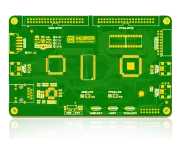
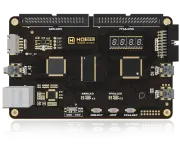


Searching for “PCB manufacturer USA” turns up dozens of companies with very little to actually help you tell them apart. Quality, capability, and price are the obvious starting points, but the right choice depends on what you’re building — a one-off prototype, a mid-volume production run, or a design that needs advanced capabilities like HDI or rigid-flex.
This guide covers what to actually evaluate when comparing US-based PCB manufacturers, a side-by-side look at ten established options, and where a non-local manufacturer like NextPCB fits into the decision.
- Table of Contents
- Understanding the PCB Manufacturing Process
- Comparison Table: US PCB Manufacturers
- Top 10 PCB Manufacturers in the USA
- What to Look for Before You Choose
- The Case for a Non-Local Manufacturer
- FAQ
Understanding the PCB Manufacturing Process
A finished board typically passes through four stages, whether you're working with one vendor or several:
- Design: An electronics engineer lays out the board.
- Manufacturing (fabrication): The bare board is produced — layers, copper, drilling, plating, solder mask, and silkscreen.
- Assembly: Components are placed and soldered onto the board.
- Quality control: The finished board or assembly is inspected and tested.
Some companies offer all four stages under one roof ("turnkey" service); others specialize in just fabrication or just assembly. Larger electronics companies sometimes run PCB divisions in-house, while independent manufacturers — US-based or overseas — serve everyone else. See our full breakdown of the PCB manufacturing process for more detail on each stage.
Comparison Table: US PCB Manufacturers
| Company | Google Reviews | Avg. Rating (/5) | Controlled Impedance | Flexible PCB | Services |
|---|---|---|---|---|---|
| Advanced Circuitry International | 8 | 4.8 | Yes | Yes | PCBA |
| Optima Technology Associates | 1 | 5.0 | Yes | Yes | PCB |
| Bay Area Circuits | 3 | 4.3 | Yes | No | PCBA |
| Journey Circuits | 5 | 4.2 | Yes | Yes | PCB |
| TechnoTronix | 2 | 5.0 | Yes | No | PCBA |
| RedBoard Circuits | — | — | Yes | — | PCB |
| Thomas Instrumentation | 4 | 5.0 | Yes | Yes | PCBA |
| A.C.T. (USA) Int’l | — | — | Yes | Yes | PCBA, PCB |
| Epec Engineered Technologies | 7 | 4.4 | Yes | No | PCBA, PCB |
| San Francisco Circuits | 2 | 3.5 | Yes | Yes | PCB |
Top 10 PCB Manufacturers in the USA
This list is unordered — there's no first or second place. Evaluate each against your own requirements for design support, lead time, and cost.
1. Advanced Circuitry International (ACI)
With over 40 years in the industry, ACI manufactures RF and microwave PCBs and holds ISO 9001:2008 certification. The company operates production facilities across several locations, with its primary base in Duluth, Georgia. See our guide to multilayer PCBs for background on the board types most RF/microwave manufacturers work with.
2. Optima Technology Associates
A US-based manufacturer and assembler covering everything from prototypes to high-volume production runs, at a range of budgets.
3. Bay Area Circuits
Operating since 1972, Bay Area Circuits serves commercial and industrial design firms, contract assemblers, and OEMs, with a focus on PCBs for test & measurement, medical, military, and aerospace equipment.
4. Journey Circuits
Based in Illinois, Journey Circuits offers PCB manufacturing, assembly, and PCB stencils, serving industries including communications, medical, industrial, aerospace, automotive, and power devices.
5. TechnoTronix
A California-based custom PCB manufacturer and prototyping company, TechnoTronix serves aerospace/defense, wireless telecom, medical, and renewable energy customers, offering layout, prototyping, fabrication, assembly, and box build.
6. RedBoard Circuits
Headquartered in the US with manufacturing in Taiwan and China, RedBoard Circuits produces RoHS- and lead-free-compliant multilayer PCBs (3–36 layers), flexible PCBs, HDI, and metal core PCBs.
7. Thomas Instrumentation
Based in Cape May Court House, New Jersey and founded in 1971, Thomas Instrumentation produces electronic boards and systems for industrial and commercial customers, offering electronics manufacturing, PCB design, and embedded software solutions, delivering precision for a variety of industries.
8. A.C.T. (USA) Int'l
Based in Florida, A.C.T. manufactures rigid, flexible, and rigid-flex PCBs up to 22 layers, with RoHS-compliant materials and short turnaround times.
9. Epec Engineered Technologies
Headquartered in Massachusetts with operations across North America, Asia, and Western Europe, Epec specializes in custom PCB solutions for medical, military & aerospace, industrial, and automotive applications, including flex & rigid-flex PCBs and cable assemblies.
10. San Francisco Circuits
Founded in 2004, San Francisco Circuits works closely with design engineering teams on rigid, flex, and rigid-flex PCBs, multilayer boards (40+ copper layers), and materials including FR4, polyimide, and Rogers, alongside prototyping and assembly services.
What to Look for Before You Choose
Beyond the company profile, a few practical questions will tell you more than a homepage will:
- Does their capability match your board? Confirm layer count, material options, and impedance control support your specific design before you request a quote.
- What certifications do they actually hold? Ask for current certification documents (ISO 9001, IPC class, RoHS/REACH compliance) rather than relying on a website badge.
- Can they support your full order, not just the board? If you need assembly, component sourcing, or box build alongside fabrication, a single-vendor turnkey process reduces coordination overhead and shipping steps.
- What's the realistic lead time for your volume? Prototype turnaround and production-volume turnaround are different conversations — ask for both.
- How is design support handled? DFM (Design for Manufacturability) checks before production catch problems that are expensive to fix after boards are made.
The Case for a Non-Local Manufacturer
PCB and PCBA manufacturers based in major manufacturing hubs like China, such as NextPCB, are a genuine alternative to a US-based vendor, and the trade-offs are worth weighing directly against a local company:
- Cost-effectiveness: Large-scale operations and optimized production processes typically translate into more competitive pricing for both prototypes and mass production.
- One-stop solution: NextPCB combines PCB manufacturing, component sourcing, and assembly under one order, reducing the complexity of coordinating multiple vendors.
- Advanced capabilities: Support for complex designs, including multilayer boards, HDI, and flexible PCBs.
- Turnaround and logistics: An established global logistics network supports fast turnaround on eligible orders.
- Quality and certifications: See NextPCB's certificate page for current, verifiable certification documentation, along with quality-control processes such as AOI and X-ray inspection.
- Online tools: Instant online quoting, a Gerber viewer, and the NextDFM design-check tool help catch issues before production.
- Customer support: Technical support and account management for design and production questions.
If your priority is in-person support and highly specialized local manufacturing for a complex, low-volume project, a nearby US manufacturer may be the better fit. If you're optimizing for cost, a single-vendor turnkey process, and fast turnaround on standard-to-advanced boards, a manufacturer like NextPCB is worth quoting alongside your US shortlist.
If your supply chain also reaches into the EU, see our companion guide: How to Choose a PCB Manufacturer for the European Market, which covers the customs and logistics considerations specific to that region.
FAQ
Is a US-based PCB manufacturer always faster than an overseas one?
Not necessarily. Domestic shipping is shorter, but overall lead time depends more on production capacity and queue than on geography — overseas manufacturers with efficient logistics networks can match or beat local turnaround on many orders.
Do I need a turnkey manufacturer, or can I use separate vendors for fabrication and assembly?
Either works. Separate vendors can offer more specialization per stage; a single turnkey vendor reduces coordination, shipping steps, and the risk of miscommunication between fabrication and assembly.
What certifications should I actually check for?
At minimum, confirm ISO 9001 for quality management and RoHS/REACH compliance for material safety. If your product is for aerospace, medical, or automotive use, ask specifically about IPC Class 3 and any industry-specific certifications (e.g. IATF 16949 for automotive) relevant to your application.
Is it worth getting quotes from both US and overseas manufacturers for the same project?
Generally yes — comparing quotes side by side is the fastest way to see the real difference in cost, lead time, and capability for your specific design, rather than relying on general assumptions about either option.
Comparing options for your next PCB or PCBA project? Get an instant quote from NextPCB and see how it stacks up against your shortlist.