

 PCB Assembly
Arya Li, Project Manager at NextPCB.com

 NextPCB Capabilities
Printed Circuit Boards
NextPCB Capabilities
Printed Circuit Boards
 Process Capabilities
 PCB Design-Aid & Layout
 Quality
 Drills & Throughplating
 Factory & Certificate
 PCB Assembly Factory Show
Certificate
PCB Assembly Factory Show
Certificate

Support Team
Feedback:
support@nextpcb.com


1.Under normal circumstances, all the components should be arranged on the same side of the circuit board, only the top components are too dense, can arrange some highly limited and the heat of small components, such as chip resistors, chip capacitors, paste IC and other on low-level.
2.Under the premise of ensuring the electrical performance, the components should be placed on the grid parallel to each other or vertical arrangement, in order to be neat and beautiful, in general, do not allow components to overlap; components arranged in a compact, components in the entire layout should be distribution, density, and consistency.
3.Different components on the circuit board near the pad between the minimum spacing should be 1MM.
4.Away from the edge of the circuit board, generally not less than 2MM, the best shape of the circuit board is rectangular, the aspect ratio of 3: 2 or 4: 3.Circuit board is larger than 200MM by 150MM, should consider the circuit board can withstand mechanical strength.
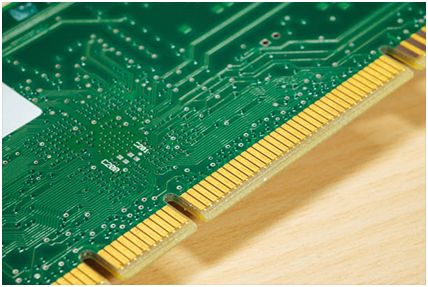
Free PCB Design Analytics Software
PCB layout design to analyze the circuit board unit, based on the function of the layout design, the layout of all the components of the circuit, to comply with the following principles:
1.According to the flow of the circuit arrangement of the location of each functional circuit unit, so that the layout of the signal flow, and make the signal as consistent as possible.
2.The core components of each functional unit as the center, around it to the layout. Components should be uniform, overall, compactly arranged on the PCB, minimize and shorten the leads and connections between the various components.
Grid settings help designers place components, traces, vias, and pads with greater precision. Using an appropriate grid size improves alignment, simplifies routing, reduces design errors, and helps ensure compliance with manufacturing requirements.
The ideal grid size depends on the design complexity and component density. Larger grids are commonly used during initial component placement, while finer grids are preferred when adjusting component positions and routing high-density circuits.
Using multiple grid resolutions improves design efficiency. A coarse grid helps speed up component placement and board organization, while a fine grid provides the precision needed for detailed routing, pad alignment, and design optimization.
Yes. Poor grid alignment can lead to off-grid component placement, routing inconsistencies, spacing violations, and difficulties during manufacturing or assembly. Maintaining consistent grid settings throughout the design process helps reduce these risks.
Grid settings do not directly affect signal integrity, but they influence routing quality. Proper grid usage makes it easier to maintain controlled trace spacing, impedance requirements, differential pair alignment, and other layout practices that contribute to better signal performance.

Still, need help? Contact Us: support@nextpcb.com
Need a PCB or PCBA quote? Quote now